LTV and CAC Explained: How to Calculate, Ideal LTV/CAC Ratio, and Strategies to Improve Unit Economics
Shusaku Yosa
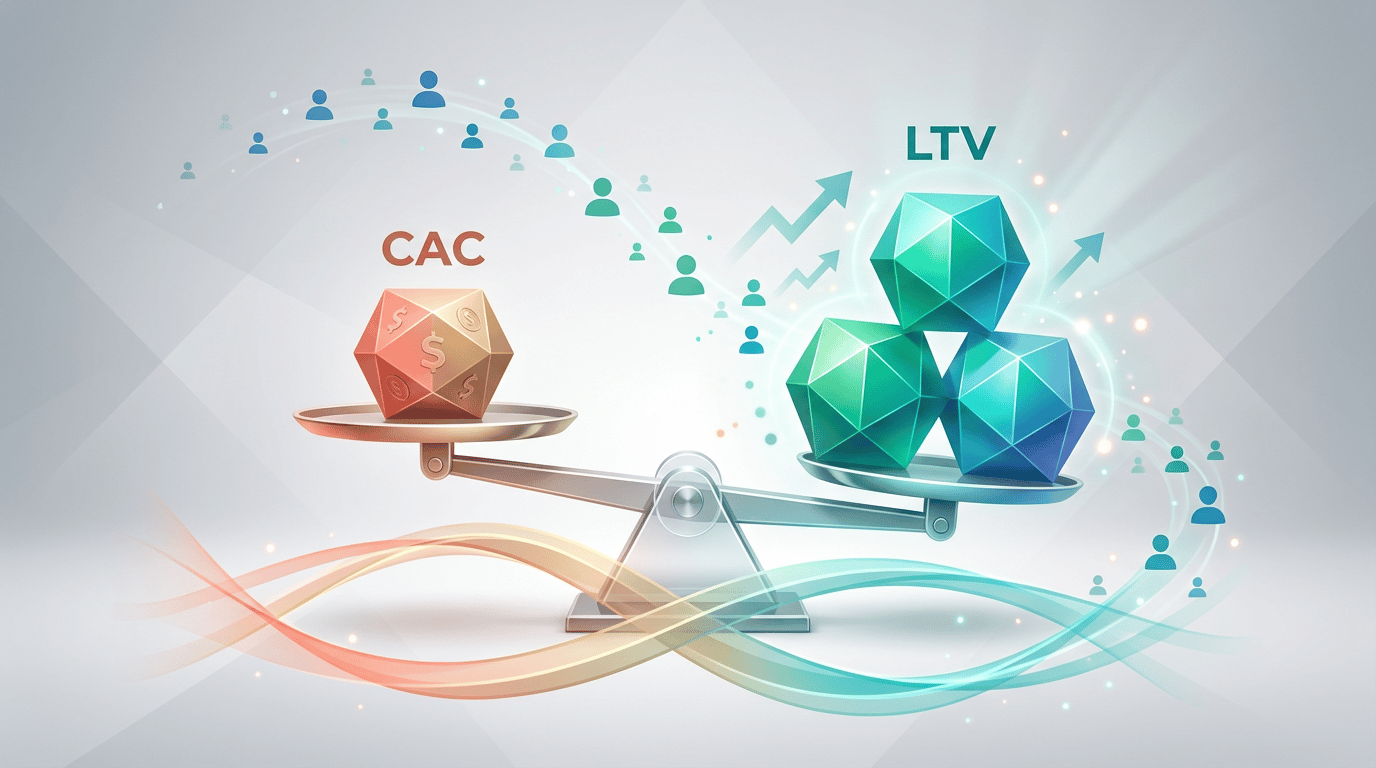
For SaaS and subscription businesses, LTV (Customer Lifetime Value) and CAC (Customer Acquisition Cost) are the most critical metrics for measuring growth and sustainability. Many business leaders struggle with questions like: “How do I calculate LTV and CAC?” “Is my LTV/CAC ratio healthy?” or “How can I improve my unit economics?”
This article covers everything from the definitions and calculation methods for LTV and CAC, to the ideal LTV/CAC ratio (unit economics) benchmark, and actionable strategies to improve both metrics.
What Is LTV (Customer Lifetime Value)?
LTV (Life Time Value) represents the total profit a single customer generates from the start to the end of their relationship with your company. A higher LTV means greater revenue per customer.
How to Calculate LTV
LTV calculation varies by business model. For SaaS and subscription businesses, the most common formula is:
LTV = ARPA (Average Revenue Per Account) × Gross Margin ÷ Churn Rate (monthly)
For example, if ARPA is $100/month, gross margin is 50%, and monthly churn rate is 5%, then LTV = $100 × 0.5 ÷ 0.05 = $1,000. Churn rate has an enormous impact on LTV—reducing churn from 5% to 2% would increase LTV to $2,500.
A simpler alternative formula is: LTV = Monthly Gross Profit Per Customer × Average Customer Lifetime (months). For example, $1,000 monthly gross profit × 24 months = $24,000 LTV.
Important: Always calculate LTV using gross profit, not revenue. Using revenue overstates the value by ignoring cost structure.
What Is CAC (Customer Acquisition Cost)?
CAC (Customer Acquisition Cost) measures the total cost of acquiring a single new customer. This includes advertising spend, sales team salaries, marketing tool subscriptions, and all other costs related to customer acquisition.
How to Calculate CAC
The formula is straightforward:
CAC = Total Customer Acquisition Costs ÷ Number of New Customers Acquired
For example, if you spend $10,000 on advertising and $5,000 on sales costs in a month and acquire 15 new customers, your CAC is ($10,000 + $5,000) ÷ 15 = $1,000.
CAC vs. CPA: What’s the Difference?
CAC and CPA (Cost Per Acquisition) differ in scope. CAC includes all acquisition-related costs—advertising, sales salaries, tools, and overhead. CPA focuses on the cost per acquisition for a specific channel or campaign (e.g., Google Ads). Use CAC to assess overall business health and CPA to evaluate individual campaign efficiency.
What Is the LTV/CAC Ratio (Unit Economics)?
Unit economics measures per-customer profitability by dividing LTV by CAC:
Unit Economics = LTV ÷ CAC
For example, if LTV is $15,000 and CAC is $5,000, your unit economics equals 3. This means you earn $3 in lifetime profit for every $1 spent on customer acquisition.
Why 3:1 Is the Benchmark for Healthy Unit Economics
In SaaS and subscription businesses, an LTV/CAC ratio of 3:1 or higher is considered healthy. This benchmark is rooted in two key conditions. First, the CAC payback period should be 12 months or less—in fast-moving SaaS markets, multi-year cost recovery is impractical. Second, monthly churn rate should be 3% or below. When both conditions are met, LTV/CAC naturally exceeds 3.
However, the ideal ratio varies by industry. Research shows that even within SaaS, business services average 3:1, fintech averages 5:1, and adtech can reach 7:1. Set targets appropriate for your specific market.
When LTV/CAC Is Too High
An extremely high LTV/CAC ratio isn’t always good news. It may indicate you’re underinvesting in growth—if you could spend more on acquisition and still maintain healthy economics, you’re leaving growth on the table. A very high ratio may signal an opportunity to accelerate growth through more aggressive marketing and sales investment.
3 Strategies to Increase LTV
1. Reduce Churn Rate
Churn rate has the single largest impact on LTV. Even small reductions in churn dramatically improve lifetime value. Effective strategies include robust onboarding programs, proactive customer success outreach, and continuous product improvement. The goal is to help customers realize ongoing value so they stay longer.
2. Increase Revenue Per Customer Through Upsells and Cross-Sells
Offer existing customers premium plan upgrades or complementary features to increase ARPA (Average Revenue Per Account). Use data on customer behavior and usage patterns to identify the right time and offer for each account.
3. Improve Gross Margin
Optimizing the cost of service delivery—server infrastructure, support costs, etc.—improves gross margin, which directly increases LTV. Specific initiatives include infrastructure efficiency improvements and automating or self-servicing customer support.
3 Strategies to Reduce CAC
1. Focus on High-Performing Channels
Rather than spreading budget equally across all channels, concentrate resources on those with the highest ROI. Analyze CAC and conversion rates by channel, and don’t hesitate to cut underperforming ones.
2. Improve Conversion Rates
Improving conversion rates on your website and landing pages means acquiring more leads and customers for the same ad spend, effectively lowering CAC. Focus on CTA optimization, form simplification, and page speed improvements.
3. Grow Organic Traffic
Organic traffic from content marketing and SEO has a lower marginal acquisition cost than paid advertising. Build a sustainable lead generation engine through blog content, whitepapers, and webinars. While results take time, organic channels significantly reduce CAC over the medium to long term.
Key Considerations When Using LTV/CAC
While LTV/CAC is extremely valuable, keep several points in mind. First, clearly define measurement parameters—time period, cost scope, and customer segments—and standardize them across your organization. Ambiguous definitions lead to inaccurate numbers and poor decisions.
Second, don’t rely on LTV/CAC alone. Also monitor CAC payback period and churn rate. Even with an LTV/CAC above 3, if payback takes over 3 years, cash flow becomes a problem.
Finally, CAC fluctuates with external factors. Competitive entry and rising ad costs can worsen CAC even with unchanged tactics. Monitor regularly and adjust targets as needed.
Conclusion
LTV and CAC are the foundational metrics for measuring business profitability and health. The LTV/CAC ratio (unit economics) should be 3 or above for a healthy business, supported by a CAC payback period under 12 months and monthly churn rate below 3%. To improve unit economics, combine LTV-boosting strategies (reducing churn, upselling, improving margins) with CAC reduction tactics (channel focus, CVR optimization, growing organic traffic). Monitor these metrics regularly and maintain the right LTV/CAC balance as your business scales.