What Is 1to1 Marketing? The Difference from One to One, with Examples
Shusaku Yosa
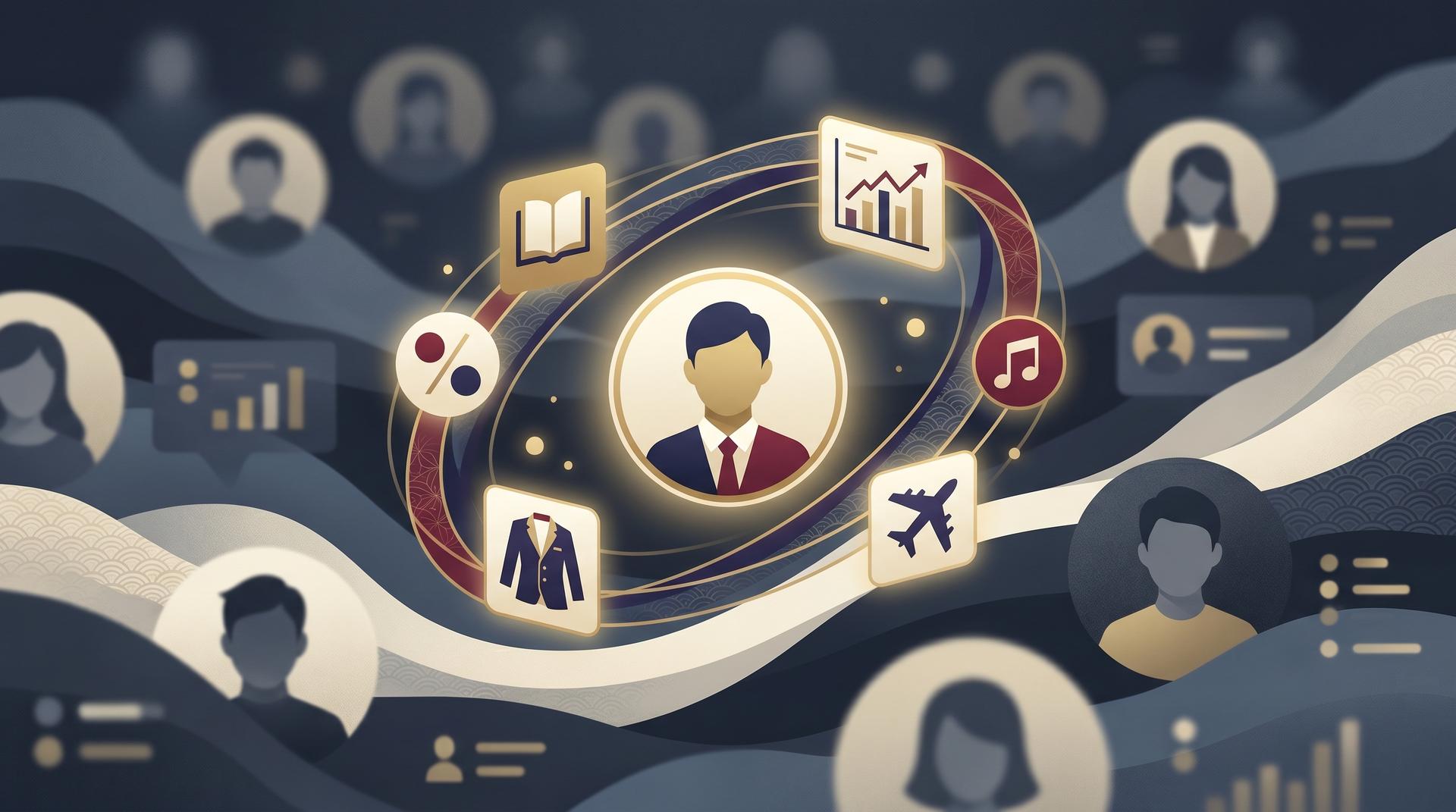
"We already approach customers by classifying them with segmentation and targeting, but we want to go one step further and tailor our messaging to each individual" — that is exactly where 1to1 marketing becomes key. This article lays out, in plain terms, what 1to1 marketing means, how it relates to the "One to One" spelling, how it differs from segmentation and targeting, and its representative methods and examples.
What Is 1to1 Marketing?
1to1 marketing is a marketing method that delivers communication optimized to each individual customer's needs, based on their attributes, purchase history, and behavioral data. Rather than sending the same message to an undifferentiated mass, its hallmark is varying "who, what, when, and through which channel" for each customer.
This idea was proposed in the 1993 book The One to One Future, co-authored by Don Peppers and Martha Rogers. Its ultimate aim is not short-term sales but raising customer satisfaction and loyalty to maximize customer lifetime value (LTV).
Is There a Difference Between "1to1" and "One to One"?
To put the conclusion first, there is no difference in meaning between "1to1 marketing" and "One to One marketing." "1to1" is simply "One to One" written with numerals, and both refer to the same concept. It is sometimes also written as "one-to-one marketing."
In other words, it is a variation in spelling, not a difference in the method or the underlying idea. When searching, you can assume either spelling covers the same topic. The difference truly worth understanding is not the spelling, but the difference from segmentation and targeting described next.
The Difference from Segmentation and Targeting
Essential to understanding 1to1 marketing is its relationship with segmentation and targeting. These form the core of STP (Segmentation → Targeting → Positioning), the fundamental framework of marketing strategy.
- Segmentation (market subdivision): Dividing the market into groups (segments) that share common features such as age, region, needs, or behavior.
- Targeting (choosing the market to pursue): Selecting, from the divided segments, the promising group your company should pursue.
In short, segmentation and targeting capture customers at the "group (segment)" level and design messaging aimed at that group. 1to1 marketing, by contrast, is positioned as taking optimization a step further, all the way down to the "individual" level.
- Unit of optimization: Segmentation and targeting work at the "group (segment)" level; 1to1 works at the "individual" level.
- Message: A common appeal per segment vs. an appeal optimized for each individual.
- Relationship building: A one-way approach to a group vs. ongoing individual communication.
That said, the two are not opposed; they are continuous. The realistic view is a developmental one: first build the foundation of your target customer profile with segmentation and targeting, then refine toward individual optimization once the data is in place. Rather than aiming for perfect 1to1 from the outset, starting with high-precision segment delivery is the practical playbook on the ground.
Representative Methods of 1to1 Marketing
1to1 marketing is practiced by combining several methods. Here are the representative ones.
- Recommendation: Individually suggesting products or content the customer is likely to be interested in, based on purchase and browsing history.
- Personalized email / LINE delivery: Varying delivery content and timing per individual according to the customer's attributes and behavior.
- Retargeting ads: Showing related ads on other sites to customers who once visited yours, re-approaching those still considering.
- Web personalization / LPO: Switching the displayed content or landing page according to the visitor's behavior and referral source.
To link these across channels, tools such as MA (marketing automation), CRM, and CDP are effective. Built on segmented customer data, they let you automate and optimize individual treatment that would be difficult by hand.
Examples of 1to1 Marketing
The idea of 1to1 marketing has permeated familiar services too. Here are some representative examples.
- Amazon: Based on purchase and browsing history, it recommends individually with "customers who bought this also bought," and shows a different top page to each person.
- Starbucks: Through its mobile app, it draws on purchase history to present coupons and recommended menu items suited to each customer's preferences.
- Netflix: Based on viewing history, it varies the titles and thumbnail images shown to each user, providing an experience matched to individual interests.
In each case, what they share is going beyond messaging to the "tiers" divided by segmentation and targeting, and using behavioral data to carry it down to an "individual"-level experience.
Summary
1to1 marketing is a method of delivering communication optimized to each individual customer's needs, based on their data. "1to1" and "One to One" differ only in spelling; their meaning is the same. The essential difference is this: whereas segmentation and targeting capture customers as a "group (segment)," 1to1 takes optimization down to the "individual" level. The two are not opposed; the practical approach is to build a foundation with segmentation and targeting, then refine toward individual optimization while leveraging data and tools. As the examples of Amazon and Starbucks show, using behavioral data to stay close to the individual is the shortcut to becoming a company customers keep choosing.