Community Marketing: How to Think About It, Use Cases, and How to Grow It
Shusaku Yosa
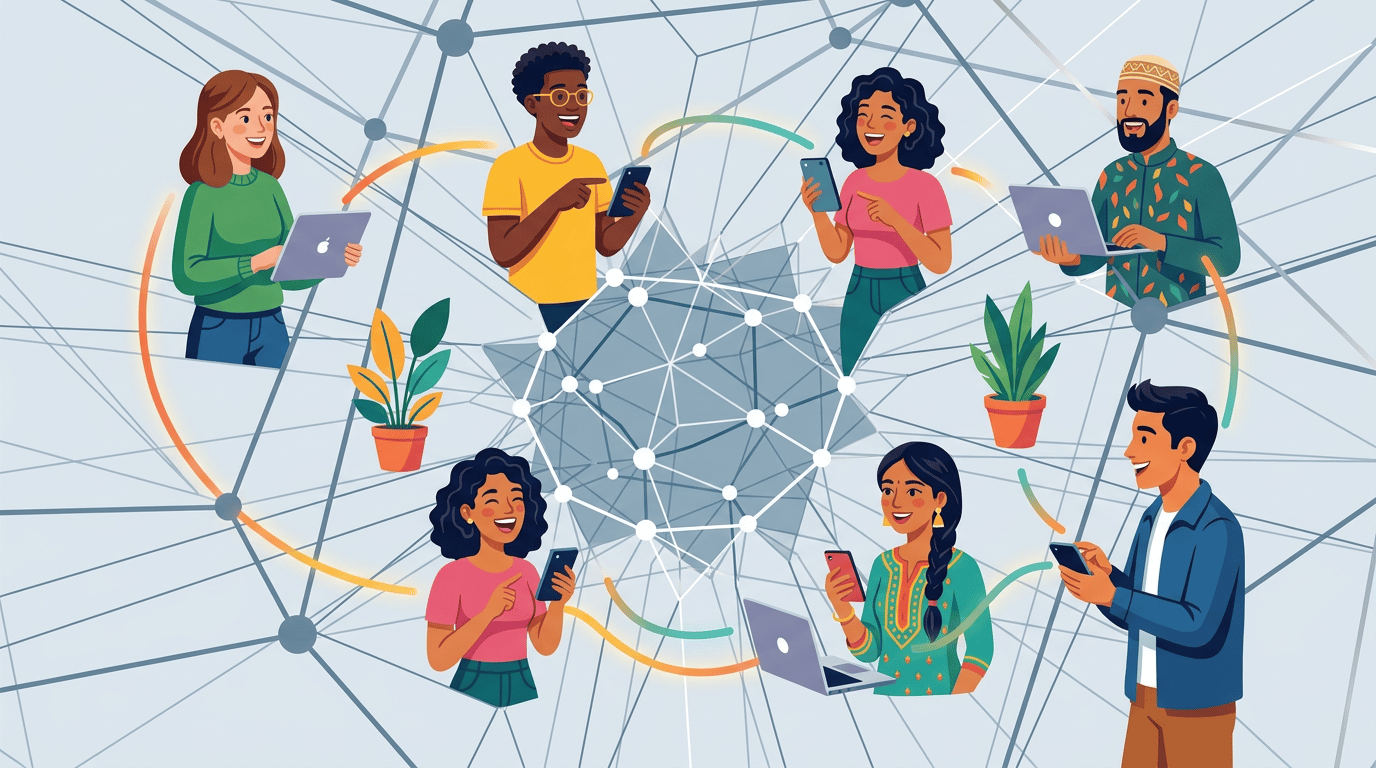
Community marketing is a method of building a space where fans of a product or service gather, then turning the interactions and trust that emerge there into business growth. Against the backdrop of rising advertising costs and growing ad fatigue, it is drawing increasing attention—across both B2B and B2C—as an approach that emphasizes long-term relationships with existing customers. This article organizes the meaning of community marketing and how it differs from conventional approaches, then explains its merits and demerits, representative examples, and the practical steps to implement it, all from a hands-on perspective.
What Is Community Marketing? A Clear Explanation
Community marketing is a method in which a company forms and operates a community where users of its products or services gather, and then leverages the interactions and feedback there for marketing. The "community" here refers to a place where the company and its customers, or customers themselves, interact, or to a group of people connected by shared interests and values.
Its biggest characteristic is that it is built not on one-directional information delivery from company to customer, but on two-way communication—between the company and customers, and among customers themselves. Users teach one another information and know-how, deepen their attachment to the brand, and spontaneously spread word of mouth. Through this flow, companies aim to improve brand loyalty, acquire new customers, and gain hints for product improvement.
Why It Is Drawing Attention
The concept of community marketing is not new in itself, but it has been attracting renewed attention in recent years. The main environmental changes behind this are as follows.
- Ad fatigue and rising acquisition costs: Conventional advertising is becoming less effective, and the cost of acquiring new customers is rising
- The expanding influence of individuals via social media: Real users' voices (word of mouth and UGC) now influence purchasing more than company messaging
- Commoditization of products: Differentiation by features alone has become difficult, and we have entered an era where products are chosen through "empathy" with a brand's worldview and values
- A shift toward valuing existing customers: The focus is moving from a bias toward new acquisition to building relationships with existing customers that raise LTV (lifetime value)
How It Differs from Conventional Marketing
Community marketing differs greatly in approach from conventional marketing. The differences between the two can be summarized as follows.
- Direction of communication: Conventional marketing is one-directional, from company to customer. Community marketing centers on two-way exchange
- Primary objective: Conventional marketing centers on acquiring new customers. Community marketing centers on retention (keeping existing customers) and improving loyalty
- The user's role: Conventionally, users are "receivers" of information. In community marketing, users become "participants" and "co-creators"
- Time until results appear: Conventional marketing produces results that are relatively short-term and measurable. Community marketing shows its effects over the medium to long term
It is not a matter of which is superior; they are measures with different objectives. Conventional advertising is effective when you want to broaden awareness, while community marketing shows its strength when you want to grow post-purchase satisfaction and LTV. The realistic approach is to combine and use both as appropriate.
The Merits of Community Marketing
The main merits that community marketing brings to a company are as follows.
Improving Customer Loyalty and LTV
By communicating continuously with customers through the community, attachment to and trust in the brand grow, and the number of loyal customers increases. Loyal customers are less likely to switch to competitors and continue using your products and services over the long term, which leads to maximizing LTV and stable revenue.
Generating Trustworthy Word of Mouth and UGC
Messages from actual users are more readily trusted than company advertising and can be the deciding factor in a purchase. The word of mouth and UGC (user-generated content) that emerge from a community become a brand asset that increases the consideration material for new customers without spending on advertising.
Putting Customer Feedback to Use in Products and Services
A community is a valuable touchpoint where you can continuously gather customers' real voices. Feedback such as requests, usability, and points where people get stuck can be reflected speedily in product development and service improvement. Because you can approach the same users repeatedly, it is also possible to observe the effects of measures over time.
Reducing the Customer Support Burden
Many questions about how to use a product are resolved within the community by users teaching one another. As know-how like "if you get stuck, do this" accumulates and circulates, you can deepen users' product understanding while keeping the company's support costs down. Especially for products with a high learning curve, such as B2B SaaS, this effect translates directly into higher customer retention.
Demerits and Cautions of Community Marketing
While there are many merits, there are also points to keep in mind when undertaking it.
- It takes time to produce results: Because it is built on intangible assets such as trust and engagement, you need a perspective of six months to several years before it connects to direct results like revenue. Rushing to sell in pursuit of short-term results can instead damage trust
- Continuous operational resources are required: Simply creating a space does not generate interaction. You cannot do without a structure that can sustain content planning that sparks posts and ongoing outreach to members
- It is hard to measure effectiveness: Because the value of a community is difficult to quantify, if you do not decide on metrics in advance, you will not be able to make investment decisions or verify effectiveness internally
- Risk of flaming and defection: Mishandling operational policy or responses can invite user defection or flaming. You need to prepare guidelines and a policy for handling trouble
Examples of Community Marketing
Here are some representative examples of companies achieving results with community marketing.
Snow Peak (Snow Peak Way)
Snow Peak, an outdoor brand, has held "Snow Peak Way"—an event where employees and fans camp together—across Japan since 1998. It began from an internal call to "listen to our customers' voices" when the end of the auto-camping boom put the company's management in crisis. By having employees and users talk directly around the campfire, strong relationships formed, and some products were even born from participants' voices. Linked with online communities such as Facebook groups, the company has built a mechanism that circulates fans' enthusiasm.
AWS (JAWS-UG)
The cloud service AWS (Amazon Web Services) is known for "JAWS-UG," a study-group community run by users themselves. As venues where users share knowledge and help one another master the product spread nationwide, it contributes both to improving LTV in the subscription model and to acquiring new users. It is a representative example of community marketing in the B2B and SaaS domains.
Yo-Ho Brewing (Chouen)
Yo-Ho Brewing, the craft beer maker known for "Yona Yona Ale," holds an event called "Chouen" where employees and fans enjoy beer together. Rather than a fan-appreciation event or entertaining clients, its characteristic is that employees and customers, and customers with one another, interact as "fellow beer lovers." Starting from communication with fans via its EC site and email newsletters, the company develops fan-centered marketing across the entire organization.
Practical Steps for Community Marketing
Here is the basic flow for undertaking community marketing, organized into five steps.
STEP 1: Set Objectives and KPIs
First, clarify "what you are building the community for." The design will change depending on the objective—improving loyalty, generating UGC, collecting feedback, reducing the support burden, and so on. At the same time, it is important to decide in advance on metrics to measure effectiveness, such as the number of posts, number of participants, engagement rate, retention rate, and conversions via referrals. Precisely because a community's results are hard to see, the design of metrics shapes later improvement.
STEP 2: Decide the Target and the Form of the Community
Define whom the community is for. The main players in community marketing are existing customers who already feel attachment to the product, and core users who want to use it more skillfully. On that basis, choose the "form of the space"—online (a dedicated site, social media group, or message board), offline (events or fan meetings), or a combination of both.
STEP 3: Create the Space and Gather Initial Members
Prepare a place for interaction and gather your first members. The scale at the start can be small. It is important to gather enthusiastic fans even in small numbers and to set guidelines so people can speak up with peace of mind. Rather than just listing prohibitions, showing welcomed behaviors creates an atmosphere where even first-time participants find it easy to post.
STEP 4: Energize Content and Interaction
Simply preparing a space does not generate interaction. Centering on themes that members spontaneously want to talk about, plan things systematically—presenting topics regularly, introducing members' success stories, and so on. Note that community marketing is a "pull-type" measure that draws users in; one-directional selling or incentives alone make continuous operation difficult. The operating side genuinely enjoying it draws out members' enthusiasm.
STEP 5: Measure Effectiveness and Feed It Back into the Business
Based on the metrics decided in STEP 1, look back on effectiveness and repeat improvements. Reflect the voices gathered in the community into product development and service improvement, and use the UGC that emerges on your official site and social media—returning the community's results to the business as a whole. Once this cycle starts turning, the community begins to function as a medium- to long-term revenue base.
Conclusion
Community marketing is a method of creating a space where fans of a product or service gather and turning the trust that emerges from two-way interaction into business growth. Unlike conventional marketing that emphasizes new acquisition, its defining feature is that it centers on building long-term relationships with existing customers and on improving loyalty and LTV.
While there are many merits—such as generating trustworthy word of mouth, gaining feedback, and reducing the support burden—it takes time to produce results and cannot do without a continuous operating structure. That is precisely why setting objectives and KPIs, starting small, and nurturing the community little by little together with enthusiastic fans are the keys to success. Why not take the first step in community marketing by starting with identifying who your own company's core fans are?