What Is Customer Experience Value (CX Value)? Designing to Improve It
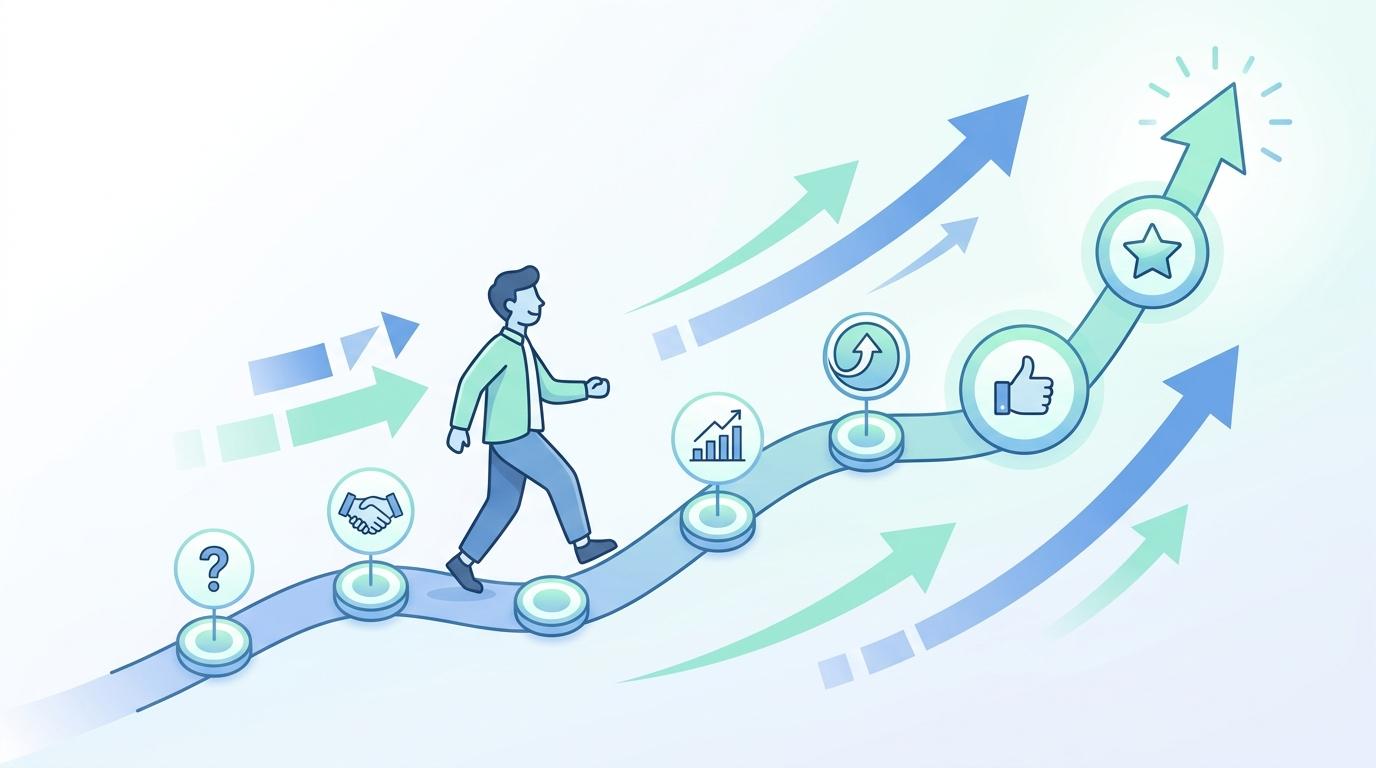
Customer experience value (CX value) refers not just to the product or service itself, but to the value a customer perceives through the entire series of experiences from before purchase to after purchase. As differentiation from competitors becomes harder, how well a company raises this experience value increasingly determines its growth. This article clearly explains what customer experience value is, the difference from customer satisfaction, why it is gaining attention, the elements that make it up, and the design points and example measures for improving it, in a way that is easy for beginners to understand.
What is customer experience value (CX value)?
Customer experience value (CX value) is the value a customer perceives from the experiences they gain through every touchpoint where they interact with a product or service. CX stands for "Customer Experience," and it expresses how much comfort, satisfaction, and benefit a customer gains across the entire process of awareness, consideration, purchase, use, support, and repurchase.
Its defining feature is that it captures not only the "tangible" value of a product's features and price, but also the "intangible" value such as the smoothness of the purchase experience, the pleasantness of the service, and the satisfaction gained through continued use.
The relationship between customer experience (CX) and customer experience value
Customer experience (CX) refers to the experience itself that a customer gains while interacting with a company or brand. What the customer perceives as valuable through that experience is customer experience value. In other words, designing a high-quality CX leads to high customer experience value.
The difference from customer satisfaction (CS)
- Customer satisfaction (CS): A point-in-time evaluation that mainly measures satisfaction against expectations at the moment of purchase or use.
- Customer experience value (CX value): Value that accumulates across the entire relationship with the customer, from awareness to after purchase, as a line or a plane. It captures the quality of a continuous relationship that goes beyond the sum of individual satisfactions.
Rather than ending with a one-time satisfaction, the idea of customer experience value is to raise long-term value through the experience as a whole.
Why customer experience value is gaining attention
The reasons customer experience value has gained widespread attention include the following factors.
- Commoditization of products and services: As differentiation on features and price becomes harder, the experience itself has become a reason for being chosen.
- The growing influence of social media and word of mouth: In an era where both good and bad experiences are shared instantly, the quality of the experience greatly affects brand evaluation.
- The spread of subscription and continued-use models: Rather than selling once and being done, getting people to keep using the product becomes a pillar of revenue, so the post-purchase experience value has become important.
- Rising customer expectations: As opportunities to encounter excellent experiences increase, the very standard of experience that customers demand rises year by year.
The four values that make up customer experience value
Customer experience value is made up of a combination of several different values. Here we organize four representative ones.
- Functional value: The practical benefit of a product or service's performance and quality, and its ability to solve a problem.
- Emotional value: Value gained on the emotional side, such as being fun to use, reassuring, or pleasant.
- Self-expression value: The value of being able to express one's identity or values by choosing that brand.
- Economic and time value: Value on the efficiency side, such as reducing effort and time, or being worth the cost.
By raising these comprehensively, you create a reason to keep being chosen that goes beyond mere satisfaction.
Key points (steps) for improving customer experience value
To improve customer experience value, it is essential to design by viewing the entire experience from a bird's-eye perspective. Keep the following steps and points in mind.
- Understand your customers deeply: Based on personas and customer data, grasp what customers want and where they are struggling. This is the starting point of all design.
- Visualize the customer journey: Map out the experience from awareness to after purchase as a single flow, and take a bird's-eye view of the movement of the customer's emotions.
- List out the experience at each touchpoint: Identify every touchpoint where you interact with customers, such as web, stores, support, and social media, and evaluate the experience at each.
- Identify pain points: Find the places where customers feel dissatisfaction or stress, and narrow down the points that should be improved first.
- Design a consistent experience: Design so that you can deliver a unified experience with no inconsistency across any channel or touchpoint.
- Measure the effect and keep improving: Continuously monitor the quality of the experience based on metrics, and keep the improvement cycle turning.
Example measures for improving customer experience value
To actually improve customer experience value, the following measures are effective.
Creating a customer journey map
Organize the customer's actions, emotions, and touchpoints in chronological order to visualize the experience as a whole. It becomes clear at which stage value is declining, making it easier to judge the priority of improvements.
Improving the experience at each touchpoint
At each touchpoint, such as the pre-purchase web experience, the purchase process, and post-purchase support, reduce the customer's burden and raise the sense of comfort. An accumulation of small improvements lifts the overall experience value.
Personalization
Deliver the most suitable information and suggestions tailored to each customer's attributes and behavioral history. The feeling that "they understand me" raises emotional value.
Collecting and reflecting the voice of the customer (VOC)
Gather customers' true feelings from surveys, reviews, and inquiries, and use them for improvement. The very experience of having their voices reflected deepens the relationship of trust with customers.
Metrics for measuring customer experience value
The effect of customer experience value cannot be tracked by feel; it must be tracked with numbers. The main metrics to watch are as follows.
- NPS (Net Promoter Score): Measures customer loyalty through "how much you would recommend this brand to others."
- CSAT (Customer Satisfaction): A metric that measures satisfaction with a specific experience or touchpoint.
- CES (Customer Effort Score): Measures how much effort it took the customer to achieve their goal. The less the burden, the higher the experience value.
- LTV (Customer Lifetime Value): The value one customer brings over the long term; high experience value shows up as retention.
- Retention rate / churn rate: Measures whether a good experience is continuing, by whether people keep using the product.
Tracking both the satisfaction of the moment and the quality of the long-term relationship with metrics, and connecting them to improvement, is the condition for success.
Summary
Customer experience value (CX value) is the value a customer perceives from the experiences gained through every touchpoint where they interact with a product or service. Unlike customer satisfaction (CS), which is a point-in-time measure of satisfaction, it captures value that accumulates across the entire relationship from awareness to after purchase. Companies are expected to raise multifaceted value—functional, emotional, self-expression, and economic—through measures such as visualizing the customer journey, personalization, and reflecting the voice of the customer. The key to success is to understand customers deeply, design a consistent experience, and keep improving based on metrics. Start by mapping out your own customer journey and finding the pain points in the experience.