iOS vs. Android: App Distribution, Updates, Security, and Measurement
Shusaku Yosa
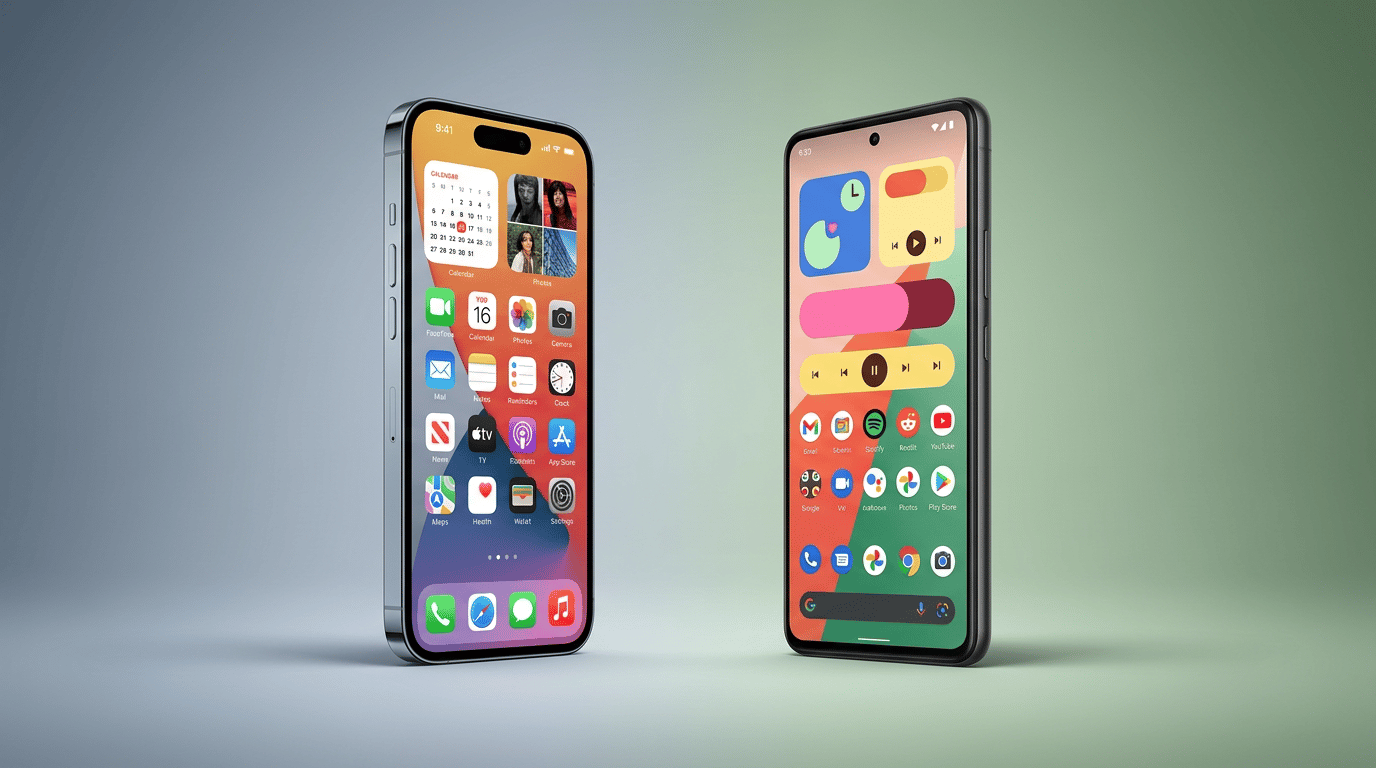
iOS and Android differ in supported devices, app distribution, updates, permissions, and measurement conditions. For an app team, the useful question is which regions, devices, OS versions, and distribution channels must be supported, rather than which operating system is universally better.
iPhone runs iOS; iPad runs iPadOS. Android is used by multiple device manufacturers, and not every Android device includes Google Play. Distribution details below reflect official information checked on October 9, 2026, with regional conditions separated from future plans.
Compare the operational basics
Area | iOS | Android | Operational check |
|---|---|---|---|
Devices | Apple iPhone | Phones and other devices from multiple manufacturers | Target models, screens, and performance |
Updates | Supported models and Apple release information | Conditions vary by model, manufacturer, region, and carrier | Release availability versus actual adoption |
Distribution | App Store plus region- and version-dependent alternatives | Google Play and other distribution channels | Location, channel, registration, and permission requirements |
Security | Sandboxing and permission controls | Sandboxing and permission controls | Patch status, permissions, source, and implementation |
An available update is not necessarily installed on the audience’s devices. Avoid universal claims about simultaneous rollout or identical support durations. Check model support and actual usage. Features requiring newer versions also need an appropriate fallback for supported older versions.
Japan’s iOS alternatives have specific conditions
Apple’s Japan distribution guidance permits alternative app marketplaces for iOS 26.2 and later in Japan. Marketplace operators require Apple authorization, and distributed apps require notarization and applicable conditions. It is inaccurate both to say every iOS app everywhere must come only from the App Store and to claim unrestricted direct Web distribution.
Japan’s arrangements should not be copied to the EU or other regions. Available features and business terms depend on the distribution route. Alternative distribution does not eliminate review, updates, or explanations to users.
Android also has channel and regional requirements
Android supports distribution beyond Google Play, but installation outside a store involves device- and version-dependent user permissions. Follow the alternative distribution guide and plan both installation and updates.
The Android developer verification program began protections on September 30, 2026, for users installing from participating stores on certified Android 7+ devices in Brazil, Indonesia, Singapore, and Thailand. Global expansion is planned for 2027 and beyond. Do not describe the same requirements as already applying to every region, including Japan, or every distribution route.
Case | Conditions to check | Avoid assuming |
|---|---|---|
Alternative iOS distribution in Japan | iOS 26.2+, authorized marketplace, notarization, and terms | Unrestricted direct distribution worldwide |
Android external distribution | Channel, device, OS, installation permission, and updates | Unconditional installation on every device |
Android developer verification | Current regions, certified devices, participating stores, and rollout plans | Identical enforcement already exists worldwide |
Do not rank security from the OS name alone
Both systems use sandboxing to separate app access. See Apple’s runtime security documentation and the Android application sandbox. Source-code openness alone does not establish security, and store review does not guarantee the absence of malicious software.
Combine OS and app updates, minimal permissions, authentication, protected communications and storage, and a trustworthy distribution source. If older devices remain supported, clearly communicate unavailable features and necessary updates.
Separate ATT from first-party usage analysis
Apple’s App Tracking Transparency concerns tracking such as linking data with other companies’ apps or websites and accessing the advertising identifier. Evaluate the actual data use against Apple’s privacy guidance. Neither “all analytics is prohibited on iOS” nor “anything first-party is permitted” is a sound interpretation.
OS permissions, store policy, and applicable law are separate conditions. Notification permission is also distinct from tracking authorization. Document what is collected, why, and where it is sent, and test behavior when permission is denied.
Identity, consent, login rates, and coverage can affect OS-level audience counts. Use the unique-user and GA4 identity guide before interpreting missing observation as less actual usage.
Create a release test matrix
Dimension | Combinations | Test |
|---|---|---|
Device and OS | Main models, screen sizes, supported old and new versions | Display, input, performance, and feature fallback |
Region and channel | Countries, stores, alternative distribution | Installation, updates, terms, and support |
Permission state | Granted, denied, changed later | Notifications, measurement, and fallback behavior |
Core flows | Login, purchase, cancellation, Web/app handoff | Success, failure, duplicates, and return state |
Prioritize from your audience’s device and regional mix, important tasks, and failure impact rather than market share alone. Include store release work, support, and future OS updates in the operating plan. Estimate development, test devices and QA, applicable registration, distribution, and payment fees, and ongoing maintenance separately for the chosen region and channel.
Compare outcomes under matching conditions
In a fictional example with matching period, region, and activity definitions, iOS has 1,000 active users and 80 paying users; Android has 1,500 active users and 90 paying users. The payer rates are 8% and 6%, respectively, while Android has more paying users in absolute terms: 90 versus 80. Paying users are deduplicated users within the period, not purchase-event counts.
This does not prove that iOS causes more payment. Investigate price, acquisition source, plan, tenure, and consent composition. Align activity using DAU and MAU definitions, and use ARPPU when revenue per paying user is the question.
OS comparison should help users install, update, use, and purchase successfully. Because distribution and permission rules change, recheck the official requirements for the relevant region when implementing the plan.