How to Improve Loyalty? Steps and Examples for Nurturing Customers
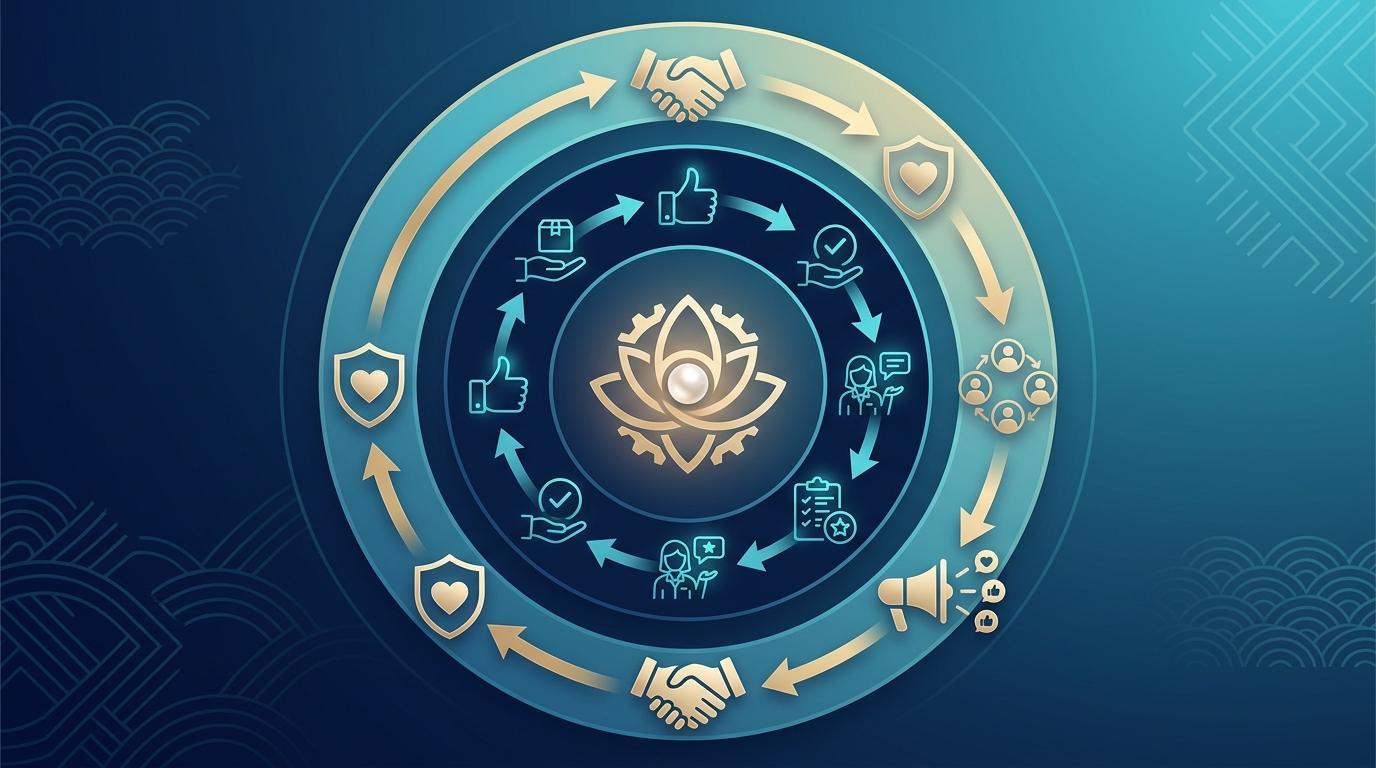
As the cost of acquiring new customers rises, improving "customer loyalty"—so that existing customers keep choosing you for a long time—is drawing attention as a key to business growth. This article clearly explains what loyalty is, the benefits of improving it, the steps for nurturing customers into loyal ones, and specific measures and examples, in a way that is easy for beginners to understand.
What is customer loyalty?
Customer loyalty refers to the strength of the "trust" and "attachment" a customer feels toward a company, brand, or product. Customers with high loyalty not only make repeat purchases, but also bring long-term value to the company through recommendations to others and favorable word of mouth.
Two types of loyalty (psychological loyalty and behavioral loyalty)
- Psychological loyalty: Refers to the customer's emotional connection, such as "I like this brand" or "I trust it."
- Behavioral loyalty: Refers to the connection that appears in actual behavior, such as repeat purchases and continued use.
If there is no emotional goodwill and a customer repeatedly buys only for price or convenience, they will leave once a better alternative appears. Raising both leads to true improvement in loyalty.
The difference from customer satisfaction (CS)
Whereas customer satisfaction (CS) is a point-in-time evaluation of whether expectations were met, loyalty refers to a long-term attachment of wanting to keep choosing from now on. Being satisfied does not necessarily mean loyalty is high; it is important to nurture satisfaction into continuous trust.
Why improving loyalty is gaining attention
The reasons improving loyalty has gained widespread attention include the following factors.
- Rising acquisition costs: The cost of acquiring new customers is higher than retaining existing ones, so retaining existing customers becomes the foundation of revenue.
- Spread of subscription and continued-use models: Rather than selling once and being done, getting people to keep using becomes important, and loyalty determines LTV (customer lifetime value).
- Commoditization of products: As differentiation on features and price becomes harder, attachment to the brand has become a reason for being chosen.
- The growing influence of word of mouth: With the spread of social media, recommendations from loyal customers have gained the power to attract new customers.
The benefits of improving loyalty
By improving customer loyalty, companies gain the following benefits.
- Improved LTV: Through repeat purchases and upselling, the lifetime value one customer brings increases.
- Preventing churn and defection: Customers with attachment to the brand are less likely to leave, leading to a stable revenue base.
- New acquisition through word of mouth: Loyal customers become recommenders and bring in new customers without advertising costs.
- Gaining improvement hints: Customers with attachment provide constructive feedback, leading to improvements in products and services.
Steps for nurturing customers to improve loyalty
Improving loyalty is not achieved overnight. Keep the following steps for nurturing customers in stages in mind.
- Visualize and segment customers: Based on data such as purchase history and usage, divide customers into layers such as new, high-value, and dormant. This becomes the starting point for approaches suited to each.
- Deliver a value experience early: Carefully onboard customers after their first purchase, and provide a success experience early on where they feel "I'm glad I bought it."
- Create continuous touchpoints: Through email, app notifications, membership programs, and the like, maintain the connection with customers even after purchase.
- Provide a sense of specialness and preferential treatment: Deliver the feeling of being valued through limited perks and rank systems for high-value customers.
- Reflect the voice of the customer and engage in dialogue: Use the voices gained from surveys and inquiries for improvement, and deepen trust by conveying that they were reflected.
- Measure with metrics and keep improving: Monitor metrics such as retention rate and NPS, and repeat improvements while verifying the effect of nurturing measures.
Measures and examples for improving loyalty
To actually improve loyalty, the following measures are effective.
Loyalty programs (points and membership ranks)
A mechanism that grants points and ranks according to purchase amount and frequency, so that the more you continue, the more you benefit. Visualizing preferential treatment motivates continuation, but care is needed because psychological loyalty is hard to nurture if it leans too much toward discounts.
Member communities and fan communities
A measure that provides a place where customers can interact with each other or connect directly with the brand, deepening attachment. The experience of one's own opinion reaching the brand raises psychological loyalty.
Personalized communication
Deliver information and suggestions suited to each individual according to customer attributes and behavioral history. The feeling of "they understand me" deepens the relationship with customers.
Hands-on support through customer success
Proactively support customers so they can achieve their goals, building up success experiences. Especially in BtoB and subscription, hands-on support greatly influences continuation and loyalty.
Metrics for measuring loyalty
The effect of improving loyalty cannot be tracked by feel; it must be tracked with numbers. The main metrics to watch are as follows.
- NPS (Net Promoter Score): A representative metric that can concisely measure customer loyalty through "whether you would recommend it to others."
- Retention rate / churn rate: A basic metric of behavioral loyalty that measures whether customers keep using without leaving.
- Repeat rate / purchase frequency: Shows how much the same customer makes repeat purchases.
- LTV (Customer Lifetime Value): The value one customer brings over their lifetime; a metric where high loyalty is aggregated.
By viewing these metrics in combination, you can grasp the state of loyalty from both the psychological and behavioral sides.
Summary
Customer loyalty is the strength of the trust and attachment a customer feels toward a company or brand, and it is important to capture it from both the psychological and behavioral sides. Improving loyalty brings major benefits to a business, such as improving LTV, preventing churn, and acquiring new customers through word of mouth. By visualizing and segmenting customers and nurturing them in stages through early value experiences and continuous touchpoints, attachment gradually rises. Start by dividing your own customers into layers and thinking about what value you can deliver to your high-value customers.