Marketing Budget Planning: Allocation and Forecast Examples
Shusaku Yosa
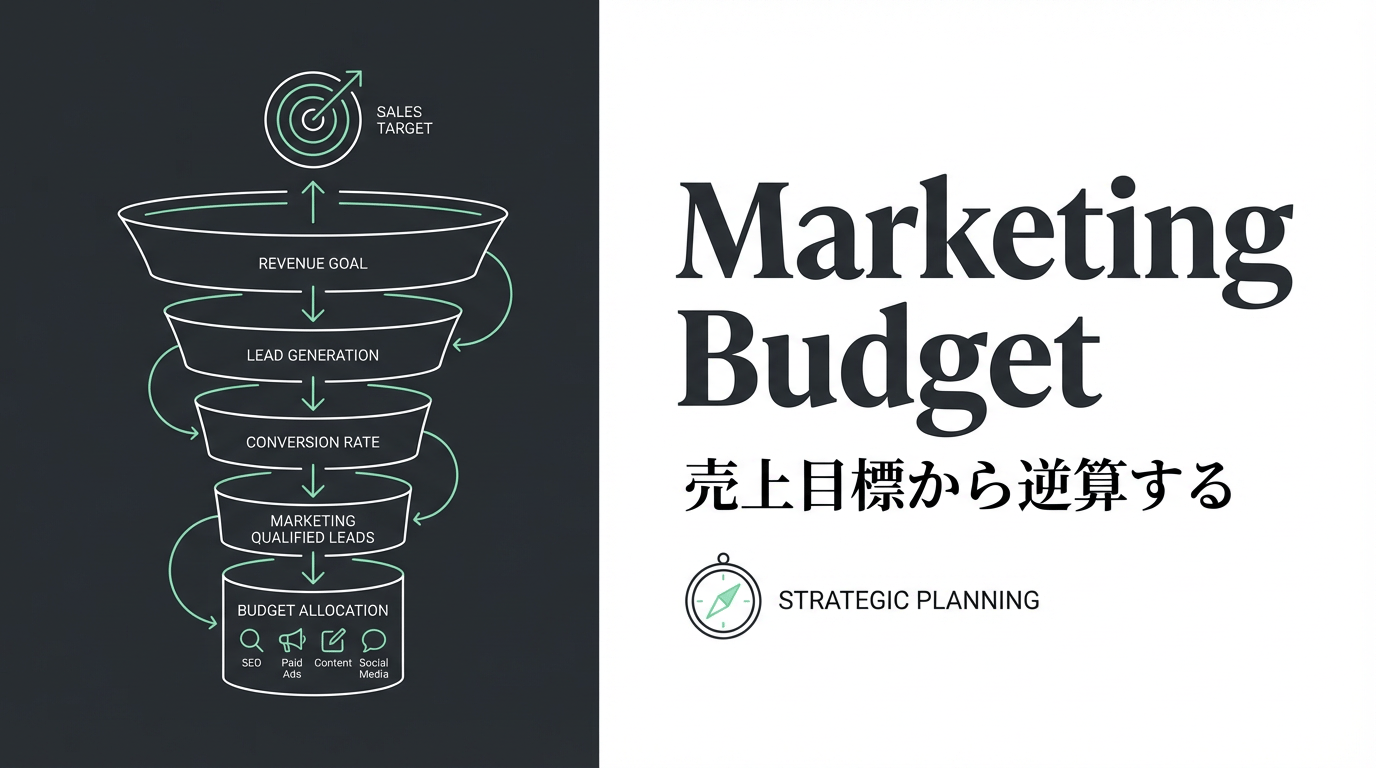
A marketing budget turns business goals into funded activities. Use revenue ratios as a sense check, then build a plan from required outcomes, operating capacity and cash constraints. After approval, update the forecast with both recorded spending and committed costs.
Choose the right planning method
Method | Useful for | Limitation |
|---|---|---|
Percentage of revenue | Checking scale against your own history | Peer definitions may exclude labor or other costs |
Objective and task | Translating goals into quantities and cost | Optimistic conversion assumptions understate the need |
Profit and cash constraints | Testing affordability and payment timing | Short-term tests can undervalue longer-term learning |
Before using a benchmark, check its year, market, company size and included costs. A survey percentage is not automatically an appropriate budget for your company. Reconcile last year’s spending into consistent categories first.
Work backward from the goal
For a hypothetical target of 20 new customers, a 25% opportunity win rate requires 80 opportunities. If 20% of qualified leads become opportunities, you need 400 qualified leads. At an assumed $100 per qualified lead, acquisition costs would be $40,000. Specify whether production and management are included before adding them.
A 20% win rate would instead require 100 opportunities and 500 qualified leads. Build conservative, base and optimistic cases. If sales take several months, current-period acquisition will not necessarily become current-period revenue.
A monthly budget example
The following dollar amounts are illustrative, not market rates or recommended allocations. Labor represents the share allocated to this work.
Category | Budget | Actual | Committed, unrecorded | Additional forecast |
|---|---|---|---|---|
Media | $6,000 | $3,000 | $0 | $3,000 |
Production | $2,000 | $500 | $1,500 | $0 |
Agency management | $1,000 | $0 | $1,000 | $0 |
Internal labor | $1,000 | $400 | $0 | $600 |
Total | $10,000 | $3,900 | $2,500 | $3,600 |
Forecast at completion is $3,900 + $2,500 + $3,600 = $10,000. The $6,100 difference between budget and actual spending is not all available for new work. Existing commitments and remaining planned delivery already consume it.
Allocate against evidence and constraints
- Fund essential ongoing work and contractual commitments.
- Allocate to activities with evidence and realistic capacity to scale.
- Give new tests a hypothesis, spending cap and review date.
- Check creative production, sales follow-up and data readiness before expanding demand.
Make the monthly review actionable
Variance | Example | Response |
|---|---|---|
Timing | An invoice moves to next month | Do not label it an efficiency improvement |
Activity | An event is canceled | Recalculate both spending and expected outcomes |
Rate | Acquisition cost exceeds the assumption | Inspect quality and targeting before adding budget |
Outcome | Opportunities remain open | Separate forecasts from closed revenue |
For each reallocation, record the source, destination, amount, rationale, outcome impact and approver. Preserve the original plan alongside the revised plan. Separate expense forecasts from payment schedules so liquidity constraints remain visible.
Minimum fields for the budget register
Include campaign ID, owner, category, month, original and revised budget, actuals, commitments, additional forecast, expected outcome and approval status. Fix currency, tax treatment and closing dates. Xtrategy features describes monthly budget and actual-cost management for media, labor and outsourced work.