What Is OMO? O2O, Omnichannel, and Practical Experience Design
Shusaku Yosa
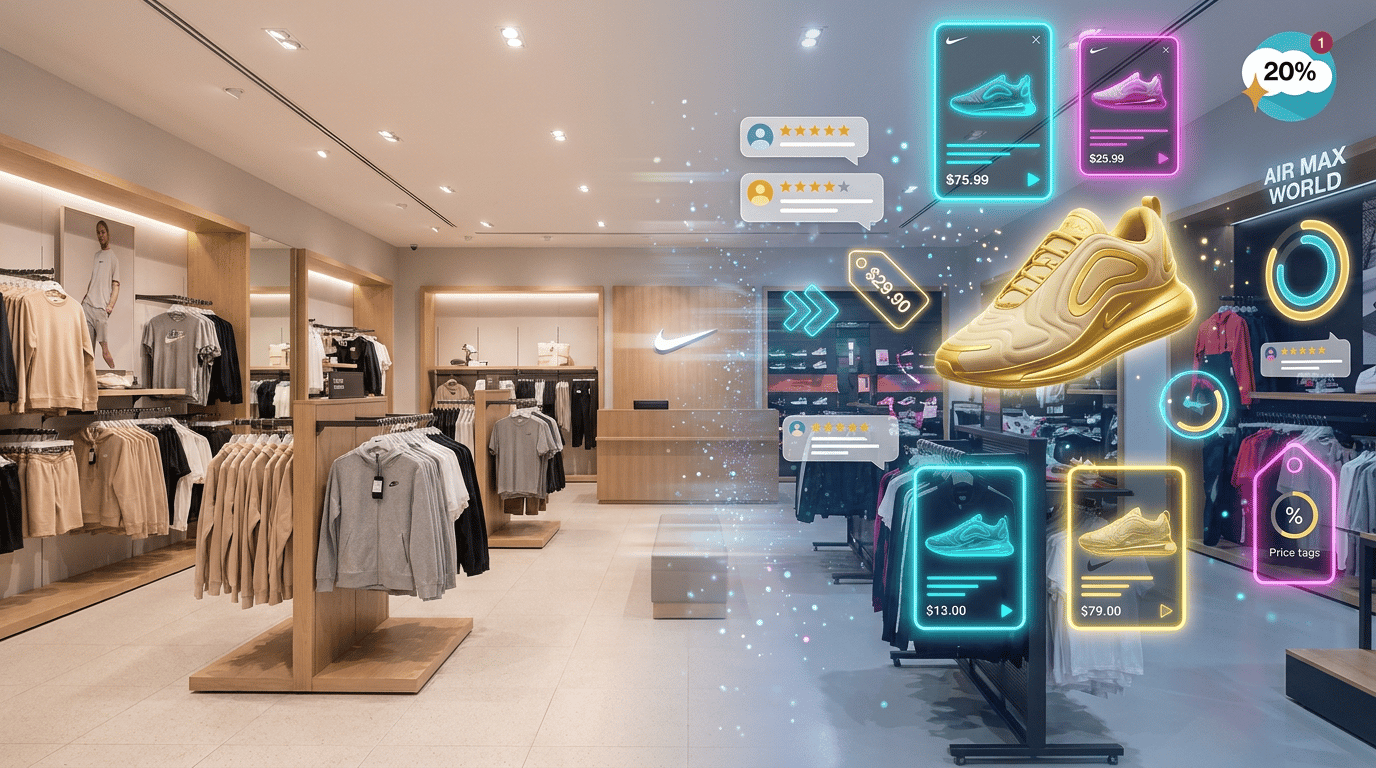
OMO stands for Online Merges with Offline. It describes designing connected online and physical experiences so customers can complete a task without being stranded between channels. An app or data platform is a means, not the objective. Start with a task such as researching a product and collecting it at a convenient location.
The term appears particularly in Asian retail discussions, including Japan. Connected ordering, pickup, advice, and ongoing service can all be relevant. Integration does not automatically increase revenue or lifetime value: check the customer benefit alongside inventory, operations, data, and cost.
Understand OMO, O2O, and omnichannel as overlapping ideas
O2O emphasizes movement from an online touchpoint to a physical location. Omnichannel emphasizes consistency across touchpoints. OMO emphasizes the merging of online and offline experience. These are useful emphases, not mutually exclusive categories or a hierarchy of quality.
Term | Focus | Example | Design check |
|---|---|---|---|
O2O | Encourage movement from online to a physical location | Find a store online and visit | Store information, route, and visit measurement |
Omnichannel | Consistency across touchpoints | Check product or order information online and in store | Information consistency and handover |
OMO | Complete a task across the channel boundary | Order online and collect at the selected store | Information, operations, completion, and alternatives |
It is misleading to describe omnichannel as inherently company-focused and OMO as the only customer-focused approach. Investigate where customers stop and what information or responsibility is missing.
A first-person account from a Ryohin Keikaku representative on Think with Google discusses OMO and the challenge of analysing ecommerce and store data in separate departments. Evaluating a connected experience requires data and methods suited to the question, rather than simply placing departmental totals side by side.
Look at verified service journeys in Japan
The following examples describe official Japanese service information checked on October 9, 2026. They illustrate available journeys, not measured sales uplift or guaranteed time savings. Check current eligible stores, products, and conditions before using the services.
Service in Japan | Documented journey | Question for your design |
|---|---|---|
UNIQLO | Online purchases with store collection and the ORDER & PICK pickup option | How are order, stock, location, and collection conditions communicated? |
Starbucks Japan Mobile Order & Pay | Select a store, order and pay, then collect there | How are store choice, preparation, handover, and busy periods connected? |
UNIQLO's delivery-method guide explains conditions for different collection methods. Do not combine standard store collection and ORDER & PICK into one promise with identical timing or requirements.
Starbucks Japan's official guide shows the ordering-to-collection process. Account and payment conditions should be checked for the chosen access route, and preparation can vary with store conditions. Mobile ordering does not establish a universal promise of no waiting.
Design a fictional pickup experience around the task
Suppose a fictional retailer wants customers to find the right item and collect it with confidence. Pair the information customers need with the work required from the store.
Customer stage | Information or processing needed | Failure route and owner |
|---|---|---|
Find and choose | Specifications, inventory update time, candidate stores | Explain uncertain availability; product and inventory teams |
Place the order | Price, payment, collection conditions, order ID | Provide a clear route to change or cancel; ecommerce team |
Store preparation | Order details, stock reservation, readiness notice | Handle shortages and delays; store team |
Collect | Pickup location, necessary verification, completion record | Provide help when the notice is unavailable; store team |
Change or return | Contact route, conditions, refund and stock updates | Align store and ecommerce explanations; named owner |
Not everyone can use an app or membership account at every moment. Provide usable alternatives for non-app users, nonmembers, and people needing assistance. A polished order screen does not compensate for an unworkable collection process.
Set data, operational, and cost conditions first
- Purpose: identify the decision or transaction each field supports; avoid unnecessary personal information.
- Identification: define order IDs and necessary shared identifiers; prevent mistaken customer matching.
- Quality: check inventory delays, duplicates, missing handover records, cancellations, and returns.
- Information handling: establish purposes, relevant notices and consent, access rights, retention, and contact routes.
- Operations: assign ordering, reservation, handover, refund, and incident responsibilities.
- Cost: include integration, store handling, training, support, maintenance, and ongoing work.
A CRM or CDP does not automatically settle these issues. The guide to CRM, marketing automation, and sales force automation helps distinguish system roles. Do not assume every individual's activity must be linked: some questions can be answered with aggregated data.
Evaluate completion, experience, and economics separately
In a fictional cohort of 100 pickup orders followed to a predefined deadline, 90 are collected on time, five are cancelled, and five remain uncollected. The on-time completion rate across all target orders is 90 ÷ 100 = 90%.
Measure | Fictional result or check | Interpretation |
|---|---|---|
On-time completion across all target orders | 90 / 100 = 90% | The denominator includes the five cancelled orders |
Separate rate excluding cancellations | 90 / 95 ≈ 94.7% | A different definition; do not mix with the 90% series |
Experience issues | Shortages, delays, unclear directions, inquiries | Keep order counts distinct from people |
Economics | Gross profit and integration, handling, and support cost | Completion alone does not establish higher profit |
Use funnel analysis to investigate stage losses, or the NPS survey design guide to investigate reasons after an experience. Respondents' recommendation intent and completion across all orders are different measures.
Begin with a limited scope and keep population, timing, deadlines, and exclusions comparable. Seasonality and store mix can change, so a higher collection rate does not prove the initiative caused additional revenue or lifetime value. To organize initiatives, owners, and evaluation conditions, explore Xtrategy's features.