What Is a DMP? Differences from CDP, How It Works, and Marketing Use Cases Explained

"What exactly is a DMP?" "How does it differ from a CDP?" — as organizations push forward with marketing DX, choosing the right data platform is an unavoidable decision. A DMP (Data Management Platform) collects, integrates, and analyzes user behavioral and attribute data from the web, enabling optimized ad delivery and marketing initiatives. However, the rise of CDPs (Customer Data Platforms) and the tightening of third-party cookie regulations have dramatically changed the DMP landscape.
This article explains the fundamental mechanics and types of DMPs (public DMP and private DMP), then clearly compares DMPs and CDPs with a structured comparison. We also cover real marketing use cases for DMPs, considerations for implementation, and the future direction of data utilization in a post-cookie world — providing a comprehensive knowledge base for practical decision-making.
What Is a DMP?
DMP Definition and Core Functions
A DMP (Data Management Platform) is a platform that collects, integrates, and manages user behavioral and attribute data from the web to improve targeting precision and optimize marketing initiatives. In practical terms, a DMP gathers data about "who is doing what" and uses that data as the foundation for "delivering the right message to the right person."
A DMP's four core functions are: data collection (capturing user behavior and attributes from websites and apps), data integration (linking and deduplicating data from multiple sources), audience segmentation (grouping users by demographics, interests, and behavioral patterns), and external platform integration (passing segmented audiences to ad platforms and marketing automation tools). Together, these capabilities improve ad targeting precision, reduce wasted impressions, and increase marketing ROI.
Types of Data a DMP Handles
DMPs work with three types of data: first-party, second-party, and third-party. First-party data is collected directly by your company — website analytics, purchase history, CRM records, and app usage data. Second-party data comes from partner organizations — their site data or media audience data shared through agreements. Third-party data is collected and aggregated by external data providers — cookie-based browsing history, app usage, and location data that you couldn't gather on your own. Traditional DMPs were built primarily around third-party data, but cookie regulations are fundamentally shifting this paradigm.
Two Types of DMPs: Public DMP vs. Private DMP
What Is a Public DMP?
A public DMP (also called an "open DMP") primarily leverages third-party data provided by external data vendors. These vendors aggregate massive volumes of user behavioral data — browsing history, search history, interest categories — from partner websites and apps, making it available to advertisers. The key advantage is reaching new users who have never visited your site. For example, you can build a segment of "users who visited multiple travel sites in the past 30 days" and reach them even if they've never been to your website.
However, public DMP data is mostly anonymized and cookie-based, so individual-level precision is limited. The same data is also available to competitors, making it unlikely to be a source of competitive advantage. Furthermore, as third-party cookie restrictions tighten, public DMP data volume and accuracy are declining year over year — a major driver behind the shift toward CDPs discussed later in this article.
What Is a Private DMP?
A private DMP primarily leverages your own first-party data. It integrates and analyzes data your company has collected directly — website logs, CRM data, purchase history, email engagement data, and app usage — for use in marketing initiatives. The advantages are high data accuracy and exclusivity, since competitors can't access your proprietary data. A private DMP serves as the foundation for deep customer understanding and personalized marketing.
However, data volume depends on your own traffic and customer base. Private DMPs are stronger for deepening existing customer relationships and improving LTV than for new customer acquisition. Notably, private DMP functionality increasingly overlaps with CDPs, and the boundary between the two has become increasingly blurred.
Public DMP vs. Private DMP: Key Differences
Here's how they compare. Data source: public DMPs center on third-party data, private DMPs on first-party data. Data precision: public DMPs use anonymized, coarse data; private DMPs use individually identifiable, high-precision data. Data volume: public DMPs offer large volumes from external sources; private DMPs are limited by your own scale. Primary use: public DMPs excel at ad targeting for new user acquisition; private DMPs at personalized campaigns for existing customers. Cookie regulation impact: public DMPs are heavily affected; private DMPs, being first-party focused, face minimal impact. In practice, use public DMPs for prospecting and private DMPs for customer engagement, though combining both is common.
DMP vs. CDP: Understanding the Difference
What Is a CDP?
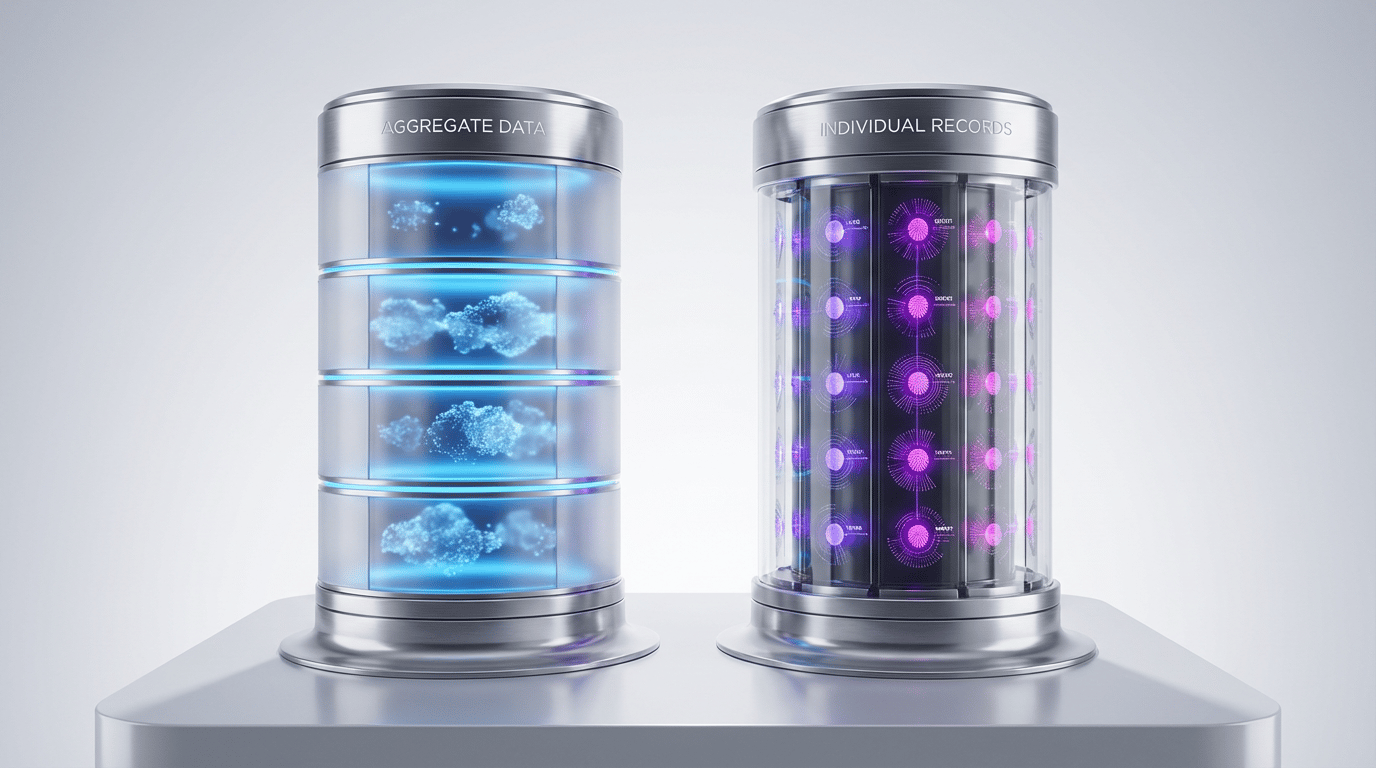
A CDP (Customer Data Platform) integrates and manages first-party data at the individual level. The fundamental difference from a DMP is granularity: while DMPs work with segments (groups of users), CDPs work with individuals. A CDP unifies data from multiple channels — web behavior, email engagement, purchases, support interactions, and app activity — into a single customer profile: "this person has taken these actions across these touchpoints."
Core Differences Between DMP and CDP
Here's a structured comparison. Data granularity: DMPs work at the segment (group) level, CDPs at the individual level. Core data: DMPs use third-party data (public) or first-party data (private); CDPs use first-party data. ID framework: DMPs rely on cookie IDs and device IDs (anonymous); CDPs use email addresses, member IDs, and phone numbers (personally identifiable). Primary purpose: DMPs optimize ad targeting; CDPs personalize marketing across all channels. Data retention: DMPs retain data short-term (cookie expiry dependent); CDPs retain data long-term (spanning the customer lifecycle). Cookie regulation impact: DMPs are significantly affected (especially public DMPs); CDPs face minimal impact (first-party focused). Primary users: DMPs serve ad operations teams; CDPs serve marketing, customer success, and broader teams.
In short, DMPs are strong at ad targeting, while CDPs are strong at customer understanding and personalization. They're not competing concepts but complementary ones. You can use CDP-unified customer data as input for DMP-driven ad targeting, leveraging both platforms together.
DMP or CDP: Which Should You Choose?
The answer depends on your priorities and current data environment. A DMP (especially public) is the right fit when ad targeting optimization is the top priority and you're focused on new customer acquisition. A CDP is the right fit when customer understanding and personalization are the top priorities and you're pursuing advanced first-party data utilization across all marketing activities.
Given the cookie regulation trajectory, building a first-party data foundation is strategically important in the medium to long term, making CDP investment a forward-looking decision. The most balanced approach in practice is running public DMP-driven acquisition campaigns alongside CDP-powered existing customer engagement strategies in parallel.
How a DMP Works: From Data Collection to Activation
Step 1: Data Collection
DMP utilization starts with data collection. Tags (JavaScript code) placed on your website capture page views, time on site, click behavior, and conversions. For public DMPs, third-party data from partner media and apps is also integrated. For private DMPs, data scattered across internal systems — CRM, purchase databases, MA tools — is consolidated into the DMP.
Step 2: Data Integration and Segmentation
Collected data is integrated and organized within the DMP. Data from different sources is linked using cookie IDs or device IDs, unifying user behavioral histories. Users are then segmented by criteria such as demographics, interests, and behavioral patterns. For example, you could create a segment like "males in their 30s who viewed golf equipment pages in the past 7 days but haven't purchased." Segment design directly determines ad targeting precision, making this the critical step in DMP utilization.
Step 3: External Platform Integration and Campaign Execution
Segmented audiences are passed to external ad delivery platforms (DSPs), MA tools, or email systems for campaign execution. For example, you might push a "users considering a car purchase" segment to a DSP for targeted display ads. With a private DMP, you could combine CRM segments with web behavior data to send personalized emails to "existing customers who viewed premium product pages multiple times." It's important to understand that a DMP doesn't execute campaigns on its own — its role is to "collect, organize, and hand off data" to execution tools.
DMP Marketing Use Cases
Improving Ad Targeting Precision
The most representative DMP use case is improving ad targeting precision. Previously, advertisers were limited to standard platform targeting (age, gender, interests). With a DMP, you can create segments based on proprietary behavioral data. For example, a real estate company could use a public DMP to build a segment of "users who visited multiple property portal sites in the past 30 days" and reach potential homebuyers who've never visited their own site — improving CTR and CVR.
Lookalike Audience Expansion
Lookalike (similar audience) expansion is another flagship DMP use case. Analyze the behavioral patterns of your best customers in the private DMP, then find new users with similar patterns in the public DMP's data pool for ad targeting. For instance, analyze repeat purchasers' browsing patterns on your e-commerce site, then extract matching profiles from the public DMP to target ads. This lets you efficiently reach "users most likely to become your best customers," improving acquisition efficiency.
Cross-Channel Frequency Management
Managing ad frequency across multiple channels is another valuable DMP application. Without a DMP, running Google Ads and Meta Ads independently can result in the same user seeing the same ad repeatedly across platforms. A DMP enables cross-channel frequency capping at the user level — for example, "show this user no more than 5 ads per week across all channels." This reduces ad fatigue while eliminating wasted spend.
Deepening Customer Understanding Through Offline Data Integration
A private DMP can integrate online behavioral data with offline data — in-store purchase history, call center interactions — to deepen customer understanding. For example, you might discover that "this customer browses Product A online but purchases Product B in-store," enabling cross-channel campaign design that bridges digital and physical touchpoints. While this overlaps with CDP functionality, ad-focused applications are where the private DMP takes the lead.
Key Considerations for DMP Implementation
Navigating Cookie Regulations
The most critical consideration for DMP utilization is cookie regulation. Apple's Safari already blocks third-party cookies via ITP (Intelligent Tracking Prevention), and Google Chrome is phasing them out as well. This makes cookie-dependent data collection increasingly difficult for public DMPs.
In response, DMP strategies must evolve. Key shifts include: strengthening first-party data collection infrastructure (promoting registration and authenticated user tracking), moving toward contextual targeting (serving ads based on the content being viewed rather than user identity), and deepening CDP integration for enhanced first-party data activation. Cookie regulation doesn't mean "DMPs become unusable" — it means "how DMPs are used is changing."
Data Quality Management
Data quality directly determines marketing outcomes. Public DMP data varies in accuracy and freshness across providers — a user tagged as "male, 30s" isn't guaranteed to actually match that profile, since it's inferred data. For private DMPs, challenges include data gaps, duplicates, and inconsistent formats. Establishing a data cleansing process before feeding data into the DMP is a critical step that significantly impacts results.
Privacy Compliance
Operating a DMP requires compliance with data privacy regulations including GDPR, CCPA, and local privacy laws. This means obtaining proper user consent (opt-in), clearly stating cookie usage purposes, explaining data collection scope, and providing opt-out mechanisms. Privacy compliance isn't just a legal obligation — it's the foundation for building user trust. Transparent data practices actually improve consent rates, creating a virtuous cycle of better data quality and volume.
Internal Organizational Readiness
DMP implementation doesn't end with tool selection. You need people who can operate the DMP — designing segments, configuring platform integrations, and running optimization PDCA cycles. Breaking down data silos between marketing, sales, and IT departments and fostering a data-utilization culture across the organization is equally important. A DMP generates no value by itself; it only works when you've clarified "what we want to achieve with data" and built the team to execute on it.
The Future of Data Utilization After Cookie Deprecation
Third-party cookie deprecation is reshaping the entire data platform landscape. Three key trends are emerging in marketing data utilization.
First, first-party data is becoming paramount. Building data collection infrastructure independent of third-party cookies is urgent. How well you can enrich your directly collected data — through membership programs, authenticated user experiences, and app engagement — will determine your future data capabilities.
Second, CDP investment is accelerating. CDPs that unify first-party data at the individual level are gaining strategic importance. While DMPs focus on ad targeting, CDPs enable personalization across all marketing activities — a broader scope that makes CDP investment strategically significant in the post-cookie era.
Third, contextual targeting is rising. Serving ads based on the context of the content being viewed — rather than user identity — is gaining attention. For example, showing cooking equipment ads to users reading recipe articles. This approach doesn't rely on cookies, respects privacy, and is expected to grow as a DMP application.
Streamlining Your Data Infrastructure
Efficient data infrastructure is essential for maximizing DMP and CDP value. When ad platform data, CRM data, and web analytics data are managed in disconnected silos, even a well-chosen DMP can't reach its full potential. A marketing management platform that centralizes budget, KPI, and ad performance data — eliminating data silos — is a prerequisite for maximizing DMP and CDP effectiveness.
Particularly for cross-channel cost-effectiveness analysis and data-driven budget reallocation, you need budget management and ad data working in a connected system. By reflecting DMP insights into campaign improvements and verifying impact through budget vs. actual metrics, you achieve genuinely data-driven marketing.
Conclusion: Understand the DMP-CDP Difference and Choose the Right Data Platform
A DMP is a platform that collects, integrates, and analyzes user behavioral data for ad delivery and marketing optimization. Here's a recap of the key points.
DMPs come in two types: public (third-party data focused, best for acquisition) and private (first-party data focused, best for customer engagement). CDPs integrate data at the individual level — while DMPs excel at ad targeting, CDPs excel at personalization across all marketing activities. They're complementary, not competing, and can be used together. Cookie regulations make first-party data infrastructure and CDP investment strategically critical going forward. Maximizing DMP and CDP value requires eliminating data silos and establishing unified budget, KPI, and ad data management.
The right data platform depends on your marketing maturity, data scale, and priority challenges. Start by clarifying whether you're prioritizing "improving acquisition targeting" or "personalizing existing customer experiences," then select the data infrastructure that best fits your needs.