What Is an Advocate? Meaning and the Difference from an Ambassador
Shusaku Yosa
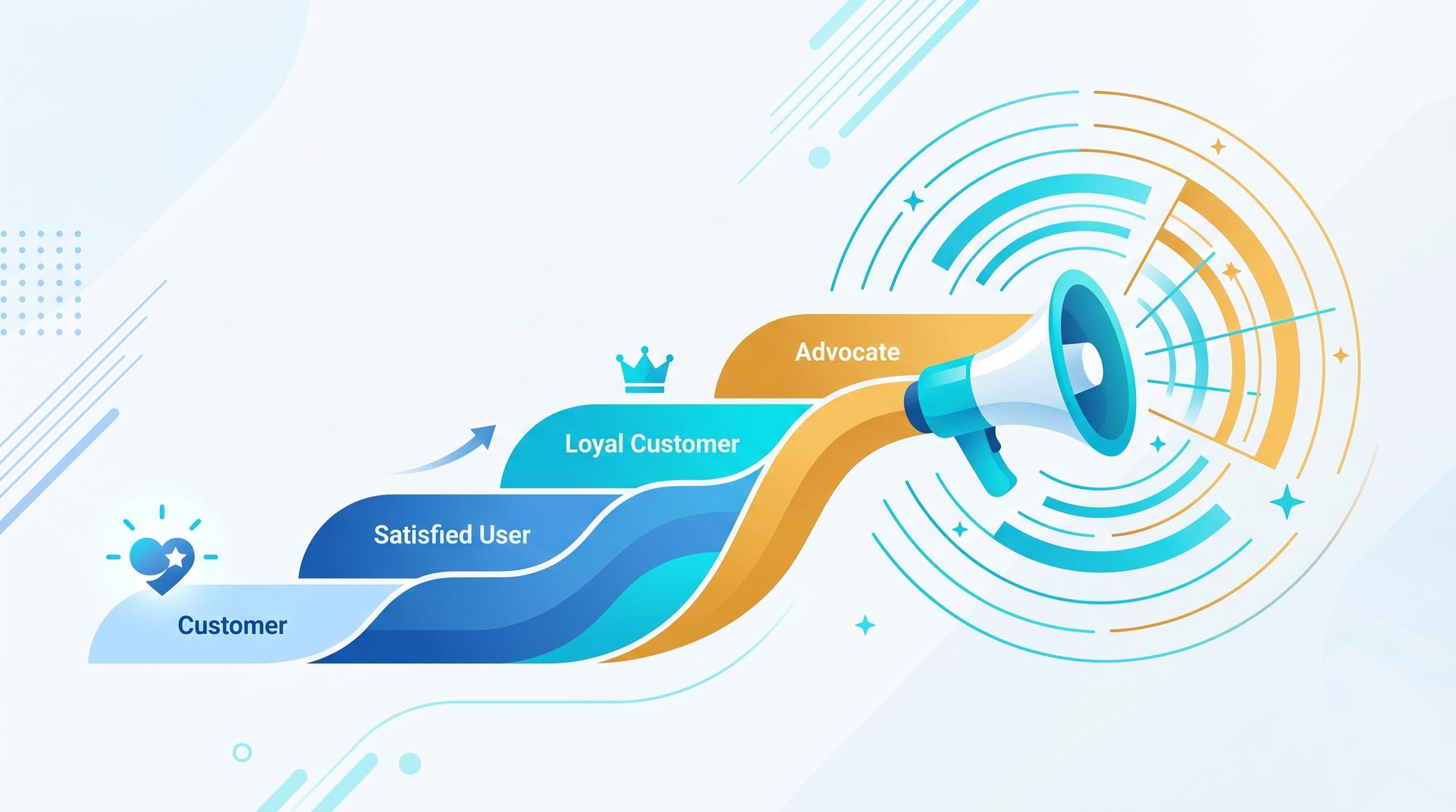
A customer who recommends your product or service to others on their own, without being asked—in the world of marketing, this is the figure known as an "advocate." As social media has made individual posts a major influence on purchasing, there are more and more situations where the voice of an enthusiastic supporter moves new customers more than any ad a company runs. At the same time, similar terms like "ambassador" and "advocacy" abound, and the differences are admittedly hard to grasp. This article organizes the meaning and origin of "advocate," how it differs from ambassadors, fans, and loyal customers, why advocates are drawing attention, and how to grow advocates within your own company.
What Is an Advocate? Meaning and Origin
"Advocate" originally means "a defender," "a supporter," or "a spokesperson" in English. The word traces back to the Latin "advocatus" (one called to help), carrying the nuance of a person who raises their voice in support of someone.
In a marketing context, an advocate is a customer who strongly supports a company, brand, or product and recommends it to those around them voluntarily. They are not merely fond of the product; driven by a desire to "tell others how good this is," they act as the brand's spokesperson through social media posts, word of mouth to friends, reviews, and more. The marketing approach that leverages the recommending behavior such customers generate is called "advocacy marketing."
Note that the word "advocate" carries different meanings across fields. In medicine and nursing there is "patient advocacy," protecting and speaking for patients' rights; in welfare there is the "child advocate" who speaks for the voices of children and the elderly. This article focuses on the advocate in marketing (a customer who supports and recommends a brand).
The Difference Between Advocate and Advocacy
Easily confused are "advocate" and "advocacy." Sorting them by part of speech makes the distinction clear.
- Advocate: A noun referring to the "person" who supports and recommends—the customer who recommends the brand themselves.
- Advocacy: A noun referring to the "behavior or activity" of supporting, defending, and recommending—the recommending behavior advocates engage in, or the activities that encourage it as a whole.
In short, the relationship is "an advocate (person) carries out advocacy (the behavior of recommending)." The effort by which a company intentionally encourages this recommendation, using customer satisfaction as a starting point to win new customers, is called "advocacy marketing."
Why Advocates Are Drawing Attention
Behind companies increasingly valuing advocates in recent years lies a change in purchasing behavior.
- Word of mouth is trusted more than ads: Consumers increasingly trust the voices of people who have actually used a product over company-generated advertising. The recommendation of an advocate, a third party, carries a persuasiveness ads lack.
- Individuals' reach has grown on social media: In an era where anyone can publish and spread information, a single advocate's post now reaches many prospective customers.
- Rising cost of new-customer acquisition: With ad costs soaring, the unit cost of acquiring new customers keeps rising. Acquisition through existing customers' recommendations brings in high-quality prospects while keeping costs down.
- Contribution to LTV: Advocates often have high repeat rates themselves and tend to be valuable customers who contribute to revenue over the long term, which also raises customer lifetime value (LTV).
The Difference Between Advocate and Ambassador
Often compared with the advocate is the "ambassador." Both recommend a brand, but they differ in their relationship with the company and whether they are compensated.
What Is an Ambassador?
"Ambassador" means a diplomatic envoy, and in marketing refers to a person commissioned or appointed by a company to handle PR and promotion for the brand. They commonly receive compensation or perks for their activity—an official "face" commissioned from an influential figure. For details on ambassadors, see our separate article "What Is an Ambassador? Meaning, Roles, and Examples in Marketing".
Main Differences Between the Two
Here are the differences between advocate and ambassador from several angles.
- Whether commissioned: An ambassador is commissioned or appointed by a company, whereas an advocate recommends voluntarily without being asked.
- Whether compensated: Ambassadors often come with compensation or perks, while advocates act out of pure goodwill, not for a reward.
- Relationship: An ambassador is based on a contract or official relationship with the company, while an advocate is a natural relationship as a single customer.
- Source of trust: An ambassador's strength is influence and name recognition. An advocate's trust comes from being "the voice of an ordinary user with no vested interest."
It isn't a matter of which is better; ambassadors who officially lend their reach and advocates who generate natural word of mouth are complementary, with different roles.
The Difference from Fans and Loyal Customers
"Fans" and "loyal customers" are also customers who like a brand, but they differ from advocates in the direction of their behavior.
- Fan: A customer who feels goodwill toward and supports a brand. However, they don't necessarily recommend it to others.
- Loyal customer: A customer who buys continuously and has high loyalty to the brand. The focus is on repeating (their own purchases).
- Advocate: A customer who, on top of goodwill and loyalty, steps into the behavior of "spreading the word" to others.
To organize it, a loyal customer is at the "I keep buying" stage, and an advocate is at the "I recommend it to others" stage. In many cases, advocates who take recommending action grow out of highly satisfied loyal customers. For nurturing loyal customers, see our separate article "What Are Loyal Customers? Strategies for Nurturing and Finding Them" as well.
How to Grow Advocates
Advocates aren't something you "appoint by design"; they "grow" from satisfied customers. To generate voluntary recommendations, work through the following steps.
- Provide a customer experience that exceeds expectations: The starting point of recommendation is strong satisfaction with the product or service. An experience that surpasses expectations is what creates the feeling of "I want to tell others."
- Find highly satisfied customers: Use surveys like NPS (likelihood to recommend) to make visible the "promoters" who would recommend you to others. These are your advocate candidates.
- Prepare mechanisms that make recommending easy: Set up an environment where customers can easily voice their support—review posting, referral programs, paths to share on social media, and so on.
- Respond to recommendations and deepen the relationship: Through reactions to posts, expressions of thanks, and community building, strengthen the relationship with customers who recommended you and connect it to continued support.
Especially effective is the use of NPS (Net Promoter Score), which lets you grasp recommendation intent numerically. Customers who give high "promoter" scores are strong advocate candidates, and you can build measures starting from their voices. For the NPS survey method, see our separate article "What Is an NPS Survey? Steps, Sample Questions, Aggregation, and Use".
Summary
An advocate is a customer who strongly supports a brand and recommends it to those around them voluntarily. It differs in part of speech from advocacy, which expresses the "behavior" of supporting and recommending, and is distinguished from an ambassador—who is commissioned and compensated by a company—by its voluntariness, lack of reward, and natural relationship as a single customer. If fans and loyal customers are at the "I like it / I keep buying" stage, advocates are at the "I spread it to others" stage. Now that word of mouth is trusted more than ads and individuals' reach has grown on social media, advocates hold value on both fronts of curbing acquisition costs and raising LTV. Start by making an expectation-exceeding customer experience your foundation, finding highly satisfied customers with tools like NPS, and building mechanisms that make recommending easy.