What Is CAC? How to Calculate Customer Acquisition Cost and How to Read It
Shusaku Yosa
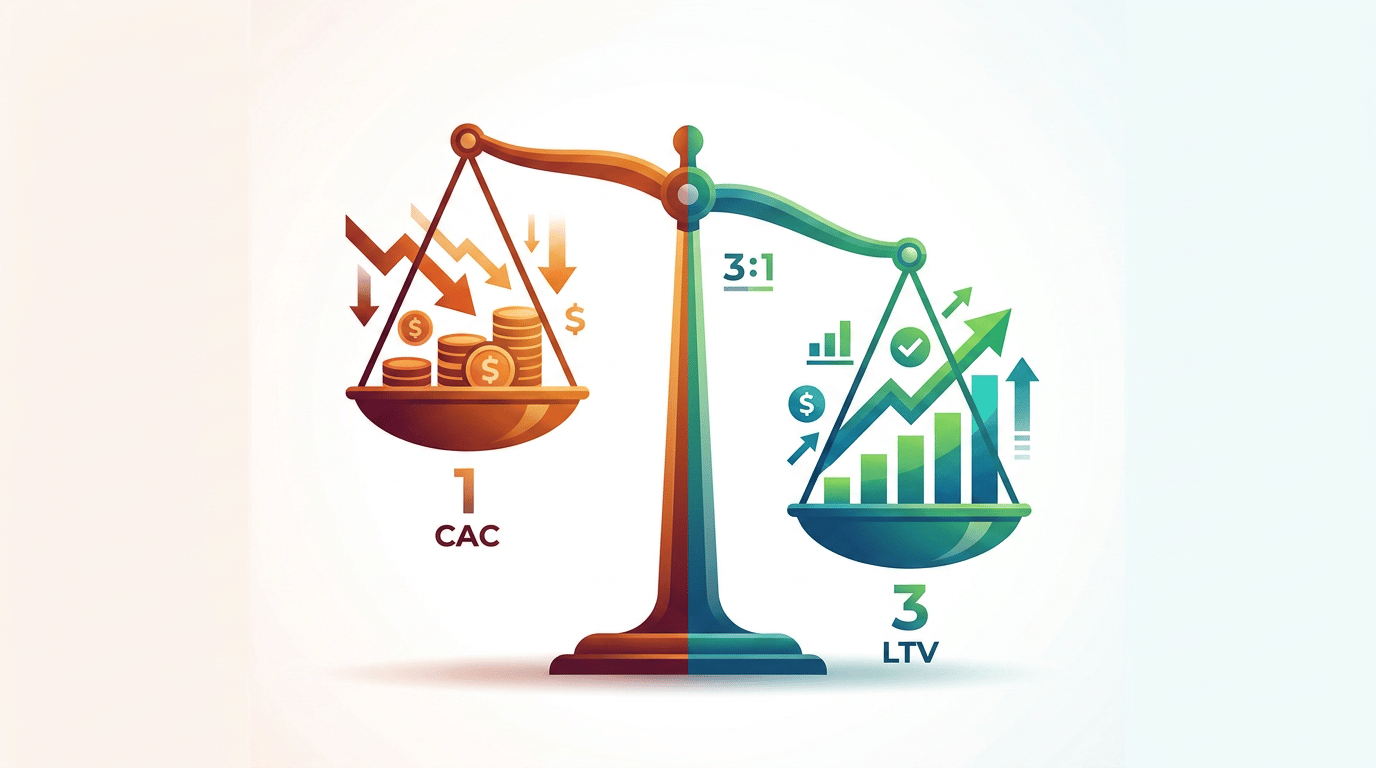
"CAC" is a metric that represents the cost of acquiring one new customer. Centered on SaaS and subscription-based businesses, it is widely used as a fundamental indicator for measuring whether a business is profitable. In this article, we organize the meaning of CAC and how to calculate it with concrete examples, and then explain the types of CAC, how to read its health, the difference from CPA, and the points for improving it.
What Is CAC? Its Meaning as Customer Acquisition Cost
CAC stands for "Customer Acquisition Cost." As the name suggests, it is a metric showing the cost incurred to acquire one new customer.
The biggest characteristic of CAC is that it includes "all of the costs" incurred in acquiring customers. This covers not only advertising spend but also the personnel costs of the marketing and sales teams, tool subscription fees, outsourcing costs, and the costs of running offline events. This makes it possible to grasp the "true cost" of acquiring customers across the entire business.
CAC is especially valued in SaaS and subscription-based businesses because these models are structured so that you "acquire a customer and then recover the investment over time." If acquisition costs are too high, you can fall into a situation where profits do not materialize no matter how many new customers you gain. That is precisely why grasping CAC and controlling profitability is essential.
How to Calculate CAC
CAC is calculated by dividing the total cost spent on customer acquisition over a given period by the number of new customers acquired in that period. The formula is as follows.
CAC = Total cost spent on customer acquisition ÷ Number of new customers acquired
For example, suppose that in a given month you spent a total of 10 million yen on marketing and sales activities and acquired 500 new customers. In this case, CAC = 10,000,000 yen ÷ 500 = 20,000 yen. In other words, it costs 20,000 yen to acquire one new customer.
When calculating, it is important to decide in advance the "period" and the "scope of costs" you will target. The period can be set monthly, quarterly, or annually depending on your purpose. If cost fluctuations from month to month are large, calculating over a longer period such as a quarter or a year stabilizes the figure and makes it easier to capture the actual situation.
What to Include in the Costs
Representative examples of the "costs incurred in customer acquisition" included in the numerator of CAC are as follows.
- Advertising costs: spend on listing ads, social media ads, display ads, and the like
- Personnel costs: the personnel costs of members involved in marketing and sales
- Tool and outsourcing costs: subscription fees for MA tools and CRM, and outsourcing costs for production and operations
- Campaign execution costs: the costs of running offline campaigns such as trade shows and seminars
How much to include in the costs varies by company, but what matters is unifying the rules for the scope within the company so that you can compare on the same basis even across different periods. If the basis is inconsistent, you can no longer tell whether changes in CAC are due to the results of your initiatives or simply differences in how you tallied the figures.
The Three Types of CAC
Depending on which scope of costs and channels you target, CAC can be broadly divided into three types, which makes analysis easier.
Blended CAC (Overall CAC)
Blended CAC is all sales and marketing costs divided by all new customers. It is calculated as "(total sales costs + total marketing costs) ÷ number of new customers acquired." Without distinguishing between ad-driven and organic, it is a metric for grasping the average acquisition cost across the entire business.
Paid CAC (Paid-Channel CAC)
Paid CAC is the cost spent on paid channels such as advertising divided by the number of customers acquired via those paid channels. It is calculated as "cost spent on paid channels ÷ number of new customers via paid channels." It is useful for evaluating the efficiency of advertising investment and judging how to optimize spending.
Organic CAC (Organic-Channel CAC)
Organic CAC is the cost spent on organic channels such as SEO, word of mouth, and referrals divided by the number of customers acquired via those channels. It is calculated as "cost spent on organic acquisition ÷ number of new customers via organic channels." It generally tends to be lower than Paid CAC, and raising the proportion of organic leads to an improvement in overall CAC.
Grasp the overall picture with Blended CAC, then break it down into Paid and Organic to see "which channel is more efficient"—this way of using the metrics makes clear which areas need improvement.
How to Read CAC: Judging Whether It Is High or Low
Looking at the standalone amount of CAC alone does not tell you whether it is high or low. Even the same "CAC of 20,000 yen" means something completely different for a business where a customer brings 100,000 yen in lifetime profit versus 30,000 yen. CAC is a metric you can only evaluate by comparing it against the value obtained from a customer.
Read Profitability with the LTV/CAC Ratio
A representative way to evaluate CAC is to compare it with customer lifetime value (LTV). Calculated as "LTV ÷ CAC," it shows how many times the lifetime profit from one customer exceeds the cost of acquiring that customer. This is the central metric of "unit economics," which represents the profitability of a business.
In general, an LTV/CAC of 3 or higher—that is, LTV being at least three times CAC—is considered healthy. When this value falls below 1, the acquisition cost exceeds the profit obtained from the customer, meaning the deficit grows the more you acquire. Conversely, if the value is extremely high, it may indicate that you are holding back investment too much and missing growth opportunities.
Read the Recovery Speed with the CAC Payback Period
Another way to read it is the "CAC payback period," which shows how many months it takes to recover the acquisition cost. In subscription models, it is found as "CAC ÷ monthly gross profit per customer." The longer the recovery period, the greater the burden on cash flow, so checking it together with the LTV/CAC ratio lets you grasp profitability more three-dimensionally.
The Difference Between CAC and CPA
A metric easily confused with CAC is "CPA (Cost Per Acquisition)." CPA is mainly used in the field of web advertising and refers to the cost per conversion generated via advertising. The difference between the two lies mainly in the "scope of costs" and the "situations in which they are used."
- Scope of costs: CAC is the "total cost of customer acquisition" including personnel and indirect costs. CPA is mainly "advertising costs only"
- Situations of use: CAC is at the level of the whole business or a channel. CPA is at the level of an individual advertising initiative
- Target: CAC includes non-advertising acquisition such as organic inflow. CPA centers on ad-driven results
Simply put, CPA is a micro metric for seeing "is this ad efficient," while CAC is a macro metric for seeing "is the business spending too much on customer acquisition." The basic approach is to improve initiatives with CPA in day-to-day ad operations and to confirm the health of the business with CAC in management decisions.
How to Improve CAC
Improving CAC is a matter of either "lowering the numerator (costs)" or "increasing the denominator (number acquired)," or a combination of both. The main approaches are as follows.
- Review efficiency by channel: break things down into Paid and Organic, and shift budget from inefficient channels to efficient ones
- Increase organic inflow: strengthen SEO, content marketing, and referral/word-of-mouth mechanisms to increase low-cost acquisition
- Raise the conversion rate: use landing-page improvements and nurturing to increase acquisitions from the same inflow and lower the cost per case
- Raise LTV: extend LTV through churn prevention and upselling, improving the LTV/CAC ratio itself
Note that lower CAC is not always better. Squeezing costs too much can slow your number of acquisitions and growth, so it is important to make investment decisions while keeping an eye on the balance with LTV and being conscious of the "acceptable upper limit of CAC."
Summary
CAC (Customer Acquisition Cost) is a metric representing the cost of acquiring one customer, calculated as "total cost spent on customer acquisition ÷ number of new customers acquired." Its characteristic is that it captures the acquisition efficiency of the entire business by including not only advertising spend but also personnel and indirect costs, and by breaking it down into Blended, Paid, and Organic, you can see which channels need improvement.
You can only judge whether CAC is high or low by viewing it not in isolation but together with the "value obtained from a customer," such as the LTV/CAC ratio and the CAC payback period. First, decide your rules for the cost scope and period, measure CAC continuously, and connect it to investment decisions while watching the balance with LTV.