What Is O2O? Meaning, Differences from OMO, and Channel Design to Prevent Drop-off
Shusaku Yosa
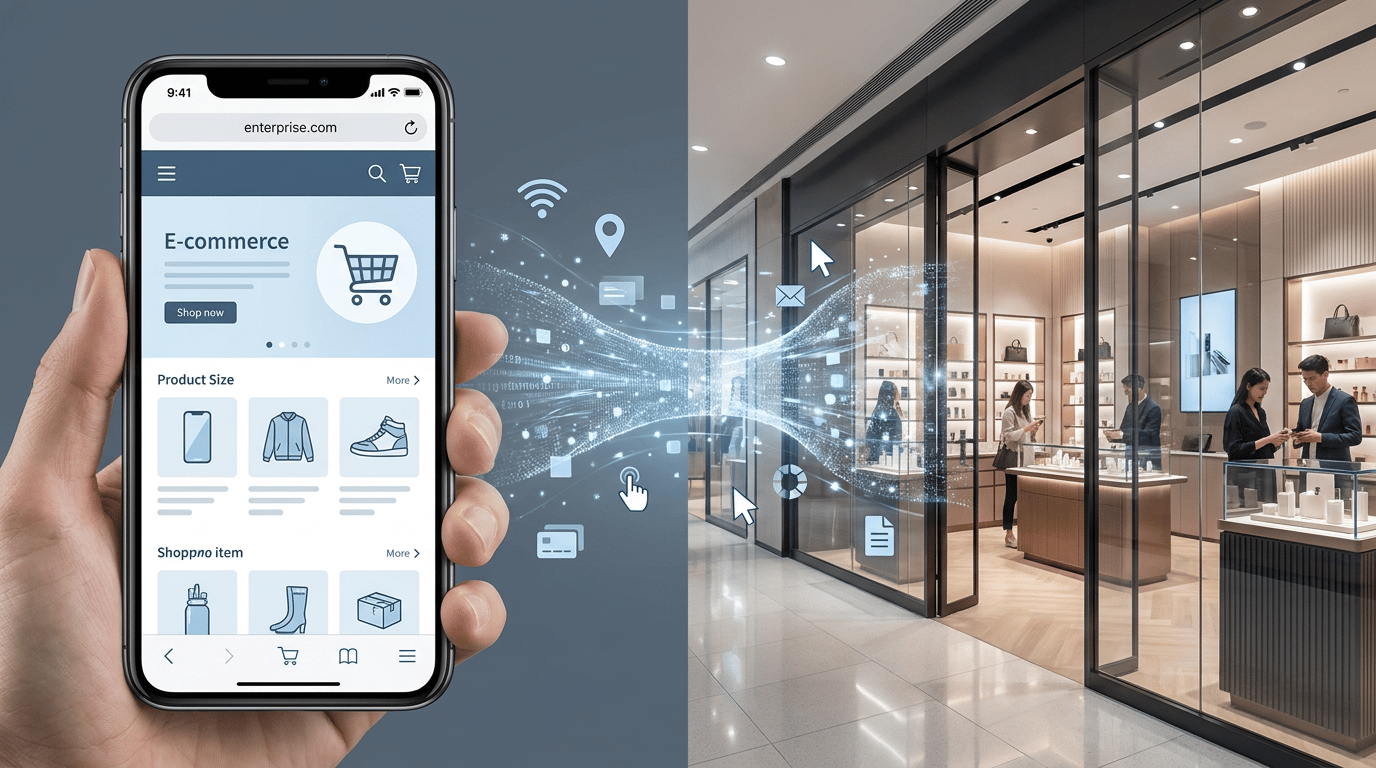
"I saw a product in an online ad and then went to a physical store to buy it." Designing this kind of behavior from the company's side is what O2O (Online to Offline) is about. With the spread of smartphones, moving back and forth between online and offline has become second nature. In this article, we organize what O2O means and how to read it, then cover the differences from the often-confused OMO, omnichannel, and reverse O2O, representative tactics, and finally the channel design needed to avoid losing customers during the journey from online to the store (preventing drop-off), all from a practical standpoint.
What Is O2O? Meaning and Reading
O2O stands for "Online to Offline" and is read "oh-to-oh." It is a marketing approach that guides customers who have made contact through online touchpoints, such as websites, social media, apps, and email, to offline venues like physical stores or event sites, leading them to actions such as visiting and purchasing.
The key point is that the leading role always belongs to "offline" (the physical store). Online is positioned as a means of delivering customers to the store. For example, distributing a coupon usable at a physical store to users who visit your EC site, encouraging them to come in, is a textbook example of O2O. Marketing built around this kind of O2O is called "O2O marketing."
Reverse O2O (From Offline to Online)
An effort that guides customers in the opposite direction, from offline to online, is called "reverse O2O." A representative example is a customer who checks a product at a physical store but makes the purchase on an online EC site. A design in which registering for a membership app in the store earns points that lead to subsequent online purchases also falls into this category.
Why O2O Is Drawing Attention
Behind the growing emphasis on O2O are the spread of smartphones and social media. Online and offline were once treated as separate, disconnected channels, but now that everyone is constantly connected, the two have become far easier to link seamlessly.
Moreover, as EC becomes commonplace, physical stores are being re-evaluated as "places that provide experiences online cannot." Turning real experiences such as trying on, sampling, and in-person service into strengths, and efficiently driving customers there from online, is the thinking that powers O2O marketing.
Differences Between O2O, OMO, and Omnichannel
O2O is often confused with OMO and omnichannel. All of them relate to linking online and offline, but the differences become clear when you organize them by "what they are centered on."
Difference from OMO: Separate or Merge
OMO stands for "Online Merges with Offline." The biggest difference is that while O2O deliberately separates online and offline to drive customers to offline, OMO merges the two without separating them, aiming at the seamless experience itself, in which customers do not perceive a boundary.
For this reason, O2O is sometimes described as "company-centric" (the goal of sending customers comes first) and OMO as "customer-centric" (maximizing the customer experience is the axis). It becomes easier to understand if you regard OMO as a further evolution of the O2O way of thinking.
Difference from Omnichannel: A Different Focus
Omnichannel refers to a system that links all of a company's sales channels (physical stores, EC, apps, social media, call centers, and so on) to provide a consistent purchasing experience regardless of which touchpoint is used. Whereas O2O focuses on "directional customer-sending from online to offline," omnichannel focuses on "connecting every customer touchpoint." It becomes easier to grasp if you position it as the channel foundation for realizing OMO.
A brief summary of the three differences is as follows.
- O2O: Separates online and offline and sends customers from online to offline. Fast-acting and easy to measure.
- OMO: Merges online and offline and aims to improve the customer experience itself. Premised on data use centered on a customer ID.
- Omnichannel: Links all channels to establish seamless touchpoints. The foundation that supports OMO.
Benefits of O2O Marketing
Fast Results and Easy Measurement
A major strength of O2O is that results appear relatively quickly and are easy to measure. By tracking the number of coupons redeemed or the number of store visits via online, you can grasp in figures how much each tactic contributed to visits. Because the link between tactic and result is easy to see, it is easy to run an improvement cycle.
Reaching Customers Who Are Already Interested
The targets of O2O's online tactics are mainly people who already have some interest in your company, such as social media followers, app download users, and newsletter subscribers. Because you can focus on highly interested customers when sending them, you can efficiently lead them to visits and purchases.
Delivered at Low Cost, Free of Area and Time Constraints
Compared with traditional visit-promotion methods such as flyers and pamphlet distribution, online ads and app push notifications allow delivery narrowed by area and attributes. Being able to deliver messages to the right people, at the right timing, and at low cost is another benefit not to be overlooked.
Representative O2O Tactics
O2O has many methods for creating reasons to visit a store from online touchpoints. Here are the representative ones.
- Coupon distribution: Distribute store-only coupons via apps, LINE, or newsletters to create a reason to visit.
- App push notifications: Highly persuasive because messages display directly on smartphones; effective for announcing sales at nearby stores.
- LINE official account: Easy delivery to customers who add you as a friend. Mini-apps can also provide stamp cards and reservation paths.
- Reservation/visit guidance from social media and web ads: Grant visit benefits to campaign participants to encourage in-store purchases.
- Buy online, pick up in store (BOPIS): Let customers pick up EC orders in store to encourage add-on purchases and repeat visits.
In particular, mobile apps and LINE are channels that pair well with O2O. This is because push notifications and chat delivery can convey reasons to visit directly to interested customers.
Channel Design Points to Prevent Drop-off
The effectiveness of O2O is determined by how well you can deliver customers who became interested online all the way to the store without losing them along the way. If the customer-sending path is complex, or if information is inconsistent between online and offline, customers drop off in the process. Here we organize the design points for preventing drop-off.
1. Make the Customer-Sending Path Short and Clear
Keep the steps from seeing an ad or social post to visiting the store as few as possible. Friction such as too many taps to obtain a coupon or make a store reservation, or forced membership registration, is a leading cause of drop-off. Creating a state of "see it, want it, and act immediately" governs the visit rate.
2. Keep Information Consistent Between Online and Offline
Discrepancies such as a coupon advertised online that cannot be used in store, or announced stock that is not actually at the physical store, damage trust and weaken the entire customer-sending effort afterward. Aligning information such as prices, stock, and campaign conditions across channels is a prerequisite.
3. Design the Path Back for Repeat Visits
Rather than ending with a single visit, O2O becomes more effective when you also design a path that returns customers to online touchpoints after they visit. If you encourage app registration or membership in store and hand out a coupon usable next time, a visit-to-repeat-visit loop is created. This is the part that connects to the thinking behind reverse O2O and omnichannel.
4. Measure Effectiveness and Identify Drop-off Points
Set up a mechanism to measure which ads and which coupons led to how many visits. By tracking the figures at each stage of delivery, click, coupon acquisition, and visit, you can see where customers are dropping off. Improving the high-drop-off points one by one leads to better overall yield for O2O.
Summary: For O2O, "Path Design" Is Essential
O2O is a marketing approach that sends customers who made contact at online touchpoints to offline stores. It is distinguished from OMO, which merges the two, and omnichannel, which links all touchpoints, by the point that it "separates online and offline and has a direction for sending customers." While it is fast-acting and easy to measure, results hinge on how smoothly you can design the path from online to the store.
First, review your own customer-sending path step by step from ad to visit, and start by identifying the points where drop-off easily occurs. If you can shorten the path, align information across channels, and design all the way to repeat visits after a visit, O2O becomes a stable pillar of visits and sales.